

A familiar Augusta problem looks like this. A business shows up on Google Maps, the phone rings a little, website traffic exists, and yet the leads are weak. The clicks come from people outside the service area, from shoppers who were never a fit, or from searchers who wanted a quick answer instead of a real relationship.
That gap is why SEO in Augusta, GA can't stop at map visibility. For authority brands such as consultants, podcasters, nonprofits, and specialized service firms, search needs to do two jobs at once. It needs to make the business visible locally, and it needs to build enough trust that the right person chooses to reach out.
Table of Contents
- Beyond the Map Pack Winning with SEO in Augusta
- Your Digital Storefront Mastering Google Business Profile
- Finding Your Augusta Audience Through Keywords and Content
- Optimizing Your Website for Augusta Searches
- Building Local Authority with Citations and Links
- Amplifying Your Voice with Podcast and YouTube SEO
- Measuring Success and Your Augusta SEO Action Plan
Beyond the Map Pack Winning with SEO in Augusta
A lot of local businesses still treat SEO like a race to rank for one phrase, get into the local pack, and wait for calls. That works for some urgent-need services. It falls short for brands that sell expertise, trust, and longer buying decisions.
The weak point is simple. Visibility isn't the same as authority. A consultant, podcast host, agency, or nonprofit can rank for a local term and still lose the prospect who wants proof, depth, and a reason to believe.
Search behavior in Augusta supports a broader strategy. The stronger opportunity often isn't publishing more thin local service pages. It's creating thought-leadership content tied to buying intent, especially around podcast launches, authority building, lead generation, and similar topics that many local agency pages ignore, as discussed in this content gap analysis from seoClarity.
Practical rule: If a page can rank but can't help a buyer make a decision, it won't carry the weight of your SEO program.
That changes how SEO Augusta GA should be approached.
Instead of asking only, “How does the business rank for service plus city?” the better questions are these:
- What does the ideal buyer search before contacting anyone? Those searches often look like questions, comparisons, planning queries, and “how to” topics.
- Which topics signal buying intent? “How to launch a podcast for a consulting firm” is often more valuable than a generic local services page.
- Where does trust get built? Usually on useful pages, strong show notes, resource guides, case-oriented content, and well-structured service pages.
A smarter workflow combines local signals with authority content. That means a strong Google Business Profile, location-aware service pages, and a content engine built around questions that serious buyers ask before they reach out. For teams managing that process across locations, listings, and keyword targets, a tool like this local business SEO platform can help organize the moving parts.
The businesses that dominate Augusta search usually aren't the ones publishing the most pages. They're the ones publishing the clearest answers for the right audience.
Your Digital Storefront Mastering Google Business Profile
Google Business Profile is still the local storefront that many prospects see before the website. In Augusta, that matters because the city had a population of 202,081 in the 2020 Census and is Georgia's second-most populous city, which creates a metro-sized search market with multiple intent groups, including residents, students, medical professionals, and visitors, according to this Augusta SEO overview.
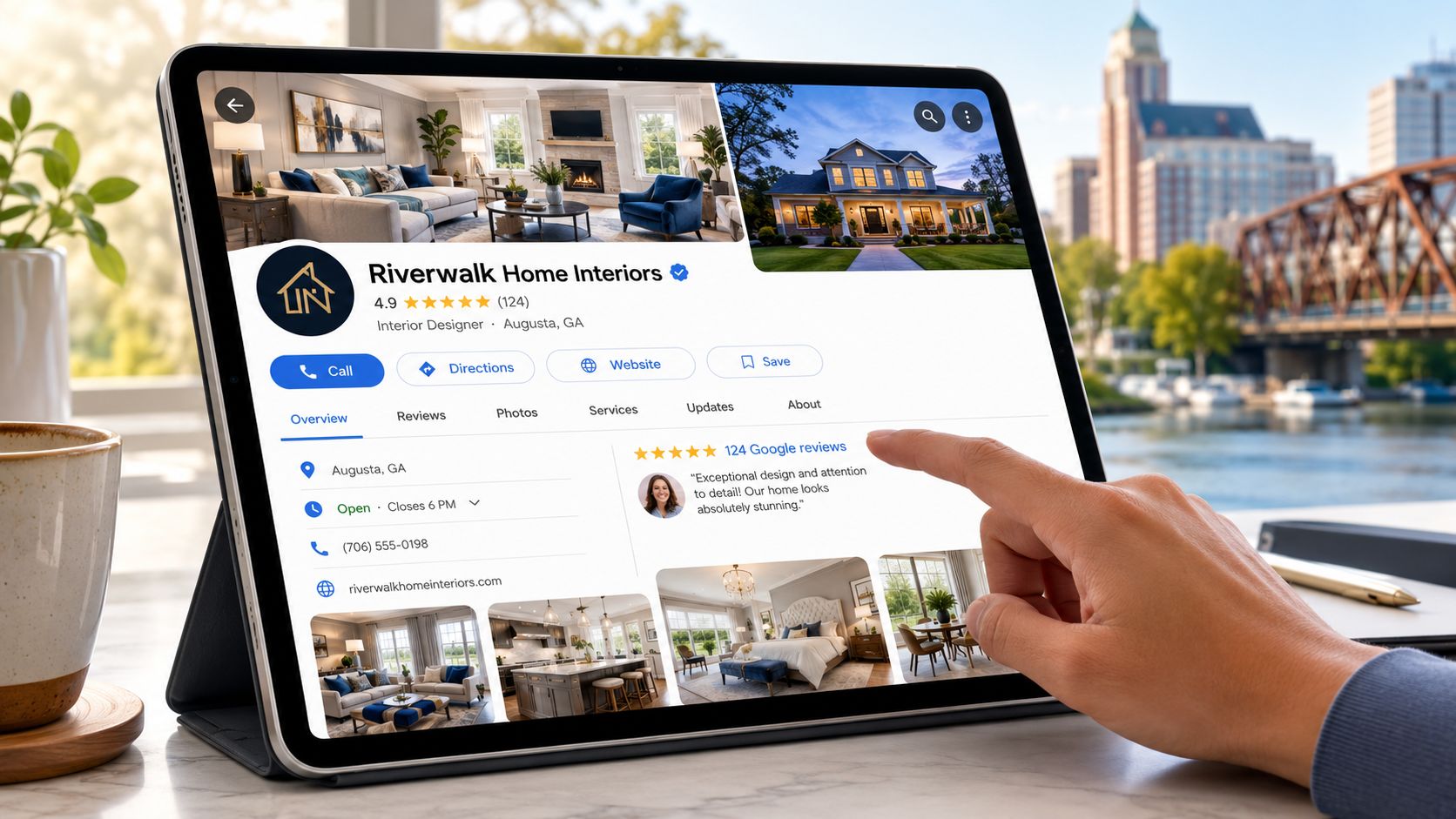
A half-complete profile won't hold up in that environment. It needs to answer intent quickly and remove doubt.
Choose categories with intent in mind
The primary category does heavy lifting. It tells Google what lane the business belongs in. Secondary categories help refine that lane, but they shouldn't dilute it.
For Augusta businesses, category decisions should reflect actual market positioning:
| Business type | Strong category approach | Common mistake |
|---|---|---|
| Medical practice | Choose the core specialty first, then supporting categories that match actual services | Using broad healthcare labels that blur the specialty |
| Consultant or coach | Lead with the clearest service identity buyers recognize | Choosing a trendy label nobody searches for |
| Creative studio or podcast company | Pick the service category closest to revenue, then support with adjacent services | Listing every possible creative function |
| Nonprofit | Use the organizational category that fits the mission and public search behavior | Leaving category strategy untouched after setup |
The same principle applies to services, products, and attributes. Every field should help a real searcher decide whether to click, call, or move on.
Treat the profile like a publishing channel
Most profiles go stale. That creates a trust gap.
A stronger Google Business Profile includes:
- A description that names the audience clearly. Not fluff. State who the business helps, what problem it solves, and the local area it serves.
- Q&A entries built from real objections. Add common questions about appointments, service areas, availability, industries served, or what makes the offer different.
- Photos that reflect the actual experience. Team photos, office environment, event appearances, studio setups, and work samples all help.
- Google Posts with local relevance. Share event participation, local partnerships, seasonal service reminders, new resources, or educational content tied to Augusta concerns.
A strong profile answers the prospect before the prospect has to ask.
Review management belongs here too. Fresh reviews improve trust, but the responses matter just as much. Good replies mention the service context naturally, thank the reviewer specifically, and avoid copy-paste language.
For businesses tightening this foundation, this guide on how to boost local SEO with GBP is useful for setup details and maintenance habits.
Finding Your Augusta Audience Through Keywords and Content
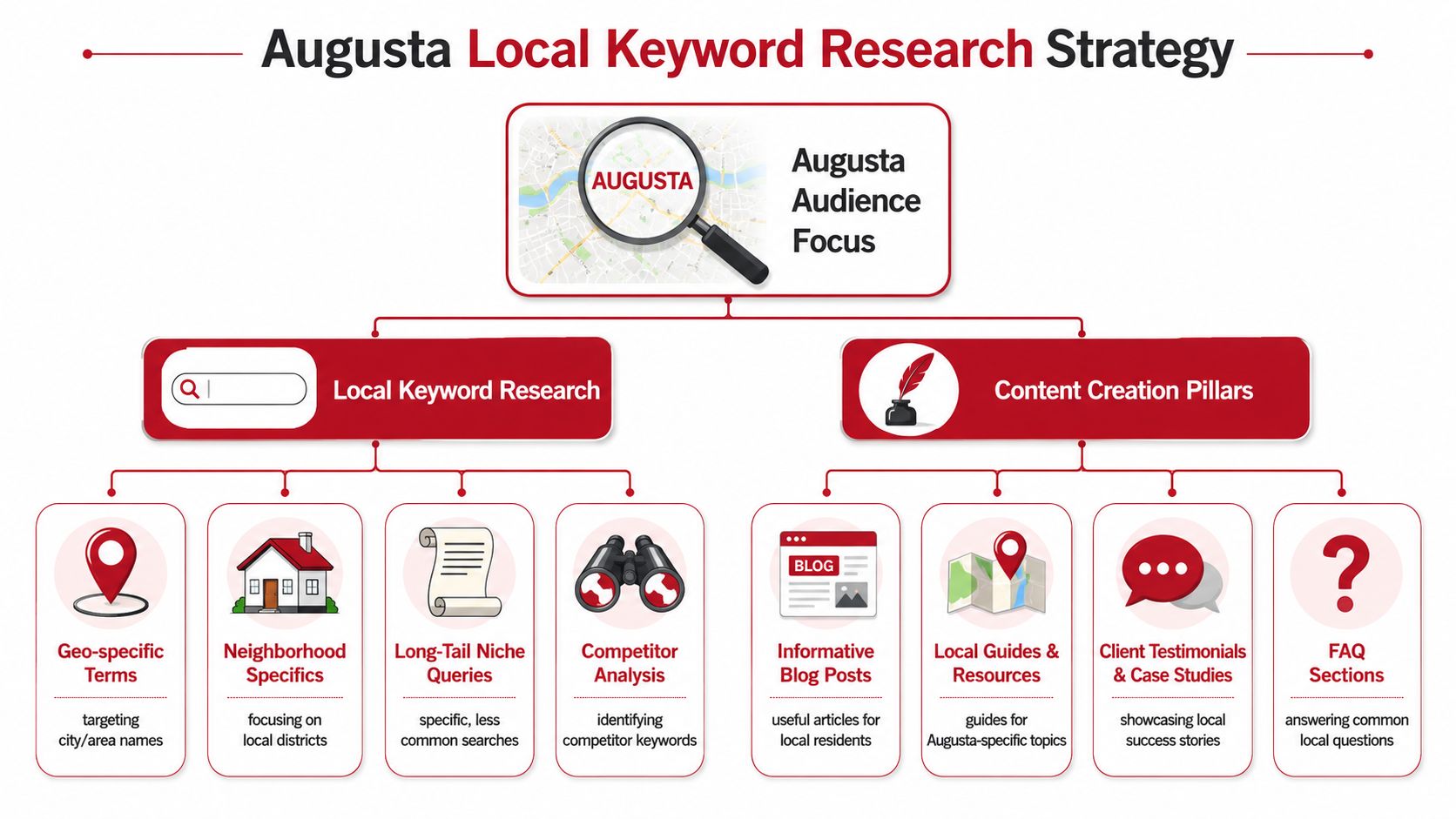
Local keyword research breaks down when it starts and ends with “service + Augusta GA.” That term matters, but it rarely captures the full market. Buyers search by neighborhood, institution, problem, urgency, and role.
Start with audience clusters, not just service terms
Good local research begins with who is searching. In Augusta, that can include homeowners, medical workers, military-connected families, students, business owners, church leaders, and nonprofit teams. Each group uses different language.
A useful way to map this is to group keywords into clusters:
- Geographic clusters such as Augusta, Summerville, Martinez, Evans, or Richmond County phrasing when relevant to the service area.
- Institution-driven clusters tied to hospitals, campuses, regional employers, local events, or nearby business ecosystems.
- Problem-based clusters built around outcomes, pain points, and decisions. These often convert better than broad service labels.
- Authority clusters focused on education and trust. For example, podcast planning, donor engagement, public speaking, brand visibility, or lead generation.
That last cluster is where many authority brands miss the opening. Generic local pages can attract shallow clicks. Topic-based content attracts people already thinking seriously about action.
Searchers rarely announce, “I'm your ideal client.” They reveal it through the specificity of the question.
Build a content waterfall from one core asset
This approach makes content manageable. Instead of trying to publish unrelated pieces every week, build one substantial asset and turn it into multiple search entry points.
A single podcast episode, webinar, interview, or detailed article can become:
- A core page targeting the main topic.
- A blog post answering one high-intent question from that topic.
- Short clips for social platforms.
- Quote graphics with local relevance.
- FAQ sections added to service pages.
- Email content that points back to the main asset.
- YouTube descriptions and chapter titles based on the same keyword set.
For teams doing both SEO and distribution, adjacent channels are helpful. Pairing local search content with a system like social media marketing in Augusta creates more ways for the same idea to reach the right audience without reinventing the message each time.
The strongest keyword strategy doesn't chase every term. It builds a web of related assets around the buyer's real concerns. That's how a business starts owning a niche instead of just renting visibility for a few local phrases.
Optimizing Your Website for Augusta Searches
A website can publish good content and still underperform because the pages don't communicate clearly with search engines. On-page SEO fixes that. It gives Google a direct, structured explanation of what each page is about, who it's for, and why it deserves visibility.
That matters even more as search results evolve. In markets like Augusta, competitive analysis needs to look beyond blue links and rankings toward rich snippet space and Quick Answers, because those placements increasingly capture attention, as noted in BrightEdge's guidance on competitive SEO analysis.
Write pages Google can understand fast
The basics still matter because they shape first impressions in the search results.
A clean local page usually needs:
- A title tag with one main intent. Don't stuff city names into every variation. Lead with the service or topic, then the location if it is appropriate.
- A meta description that earns the click. Write for humans. State the benefit, the audience, and the reason to choose the page.
- A clear H1 and useful subheads. One H1. Then H2s and H3s that break the topic into understandable sections.
- Body copy with evidence and specificity. Mention services, industries, use cases, neighborhoods served, and practical FAQs.
- Internal links that support next steps. A page about local SEO, for example, should connect naturally to related work such as Augusta web design services, because design and SEO often fail or succeed together.
Here's a simple comparison:
| Weak local page | Strong local page |
|---|---|
| Repeats “Augusta” unnaturally | Uses location naturally where it clarifies service area |
| Generic claims with no examples | Specific services, use cases, and audience language |
| Thin copy and no structure | Strong headings, FAQs, and internal links |
| No clear conversion path | Clear call to book, call, or request information |
Use schema to compete for richer search visibility
Schema is structured data added to the site so search engines can read business details with less guesswork. For local SEO, LocalBusiness schema is often the starting point.
It can help define:
- Business name
- Address
- Phone
- Hours
- Website
- Service area
- Service type
- Reviews or other relevant structured elements when implemented correctly
This doesn't replace strong content. It supports it. In practical terms, schema helps search engines connect the website, business identity, and local presence more cleanly.
For Augusta businesses competing in crowded result pages, that can influence whether the brand is understood well enough to appear in enhanced search formats. A page that is technically clear, locally relevant, and conversion-focused has a much better chance of earning attention than a page that only repeats keywords.
Building Local Authority with Citations and Links
Citations and links still matter, but the useful way to think about them is reputation, not tricks. Search engines look for consistency across the web. People do too. If the business name, address, phone number, and positioning shift from site to site, trust drops.
Fix the citations first
Before chasing links, clean up the basics.
That means checking the core business information across major platforms and directories, then correcting mismatches. Even strong businesses often have old suite numbers, outdated phone numbers, duplicate listings, or service descriptions that no longer match reality.
Start with the listings that customers use. Then review relevant local and industry directories. The exact mix will depend on the business category, but the principle stays the same. Accuracy beats volume.
A simple citation review should check:
- Name consistency. Don't alternate between legal name, brand nickname, and keyword-stuffed variants.
- Address formatting. Keep the same structure across profiles.
- Phone number discipline. Use the main public number consistently unless a platform requires a special workflow.
- Website destination. Point listings to the most useful landing page, not always the homepage.
Earn links through real Augusta involvement
The stronger local links usually come from activity already happening offline.
A consultant might speak at a chamber event and earn a mention on the event page. A nonprofit might collaborate with a local organization and receive coverage on a community site. A podcast host might interview Augusta founders, church leaders, or nonprofit directors, then both parties link to the episode page.
Local link building works best when it follows real relationships, not cold outreach templates.
Some practical link paths look like this:
- Community involvement: Sponsor a local event, participate in a panel, support a fundraiser, or host a workshop.
- Media relevance: Share a timely, well-framed expert comment with local publications when the topic matches the business expertise.
- Partnership pages: Build pages for collaborations, initiatives, or resource exchanges with other trusted local organizations.
- Podcast guest strategy: Feature credible local voices, then give them a page worth linking to, including a transcript, summary, and share assets.
The businesses that earn durable authority don't chase random backlinks. They create reasons for Augusta organizations to reference them.
Amplifying Your Voice with Podcast and YouTube SEO
Many brands treat podcast and video content like social media leftovers. That's a mistake. Audio and video can rank, support branded search, strengthen topical authority, and give buyers a much faster sense of credibility than a short service page ever could.
Turn episodes into search assets
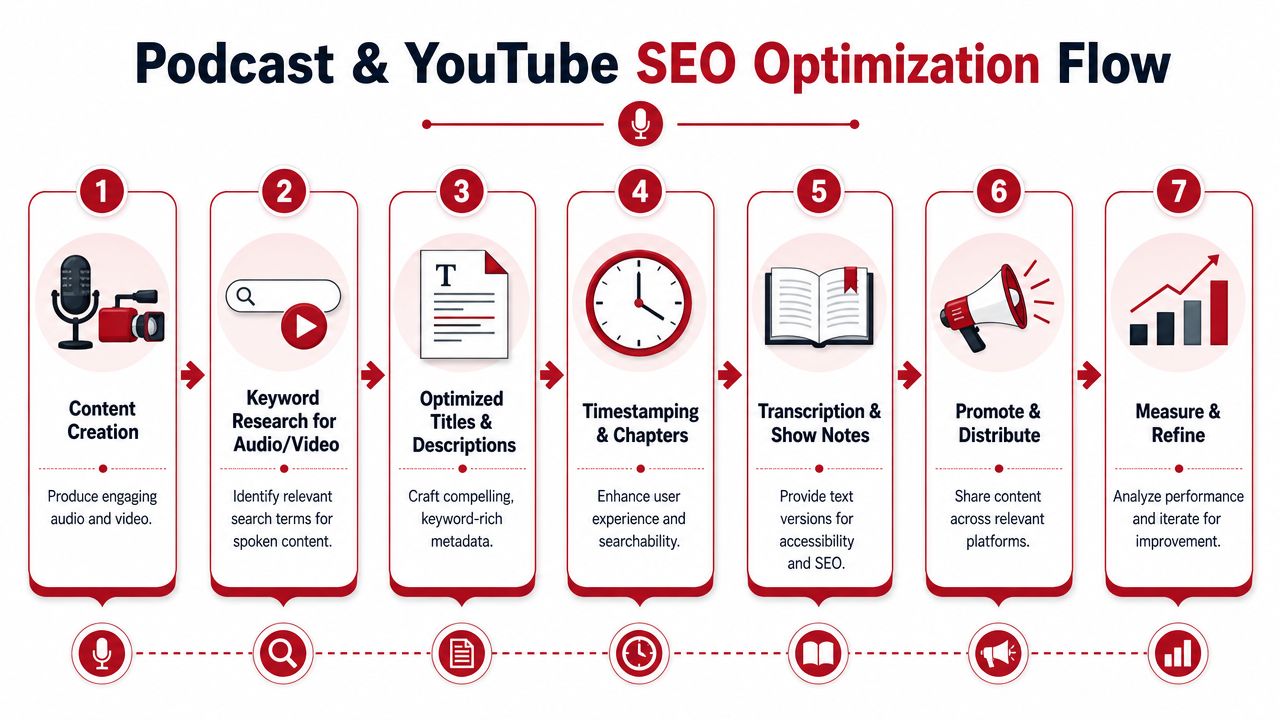
A podcast episode shouldn't stop at a title and two-sentence description. It needs metadata, supporting text, and page structure.
A useful episode package includes:
- A title built around the listener's question. “Navigating Small Business Taxes in Richmond County” is stronger than a vague branded episode name.
- A detailed description. Summarize the topic, key points, guest expertise, and who should listen.
- Show notes with headings. Break out takeaways, resources, and notable moments.
- A transcript. Search engines can parse text far more effectively than audio alone.
- A dedicated page. Give the episode a searchable home on the website.
This approach fits authority brands especially well. One episode can answer a niche local question, attract a qualified searcher, and move that person into a deeper relationship with the brand.
For organizations that want production plus repurposing support, Get Up Productions offers podcast production, YouTube-optimized episodes, show notes, and multi-platform content repurposing. In practical SEO terms, that means one recording session can become a library of searchable and shareable assets instead of a single upload.
A relevant companion read for creators working on channel positioning is this guide to Taap.bio for YouTube channel growth, which focuses on how profile and link strategy affect discoverability beyond the video itself.
A working example from a neighboring market can be seen through Savannah search engine optimization services, where the same principles of local intent and authority content apply across service-based brands.
Structure YouTube for discovery and conversion
The video itself isn't enough. YouTube SEO depends on packaging.
Use this sequence:
- Pick a keyword theme before recording.
- Put that theme in the title naturally.
- Write a real description, not a placeholder.
- Add timestamps and chapters.
- Use thumbnails that communicate topic and audience quickly.
- Group related videos into playlists.
- Link viewers to the next relevant action.
This embedded example shows how video can support discoverability and engagement when the topic and metadata are aligned.
A podcast or YouTube channel becomes an SEO asset when every episode is treated like a searchable answer, not just content to post and forget.
Measuring Success and Your Augusta SEO Action Plan
SEO gets expensive when nobody knows what success looks like. The cleanest framework uses organic traffic, keyword rankings, and conversion rates as core metrics, with Google Analytics and Google Search Console used to establish baselines and monitor changes, as outlined in this local SEO measurement guide.
Track the signals that matter
Not every metric deserves equal attention.
A practical local dashboard should answer three questions:
| Question | What to monitor | Why it matters |
|---|---|---|
| Are people finding the business? | Organic traffic and keyword visibility | Measures discoverability |
| Are the right people arriving? | Landing pages, search queries, and location relevance | Filters vanity traffic from useful traffic |
| Is SEO driving business action? | Calls, forms, bookings, and other conversions | Connects visibility to results |
Baseline tracking comes first. Without it, teams can't tell whether a gain came from a real improvement, seasonality, or a search feature change.
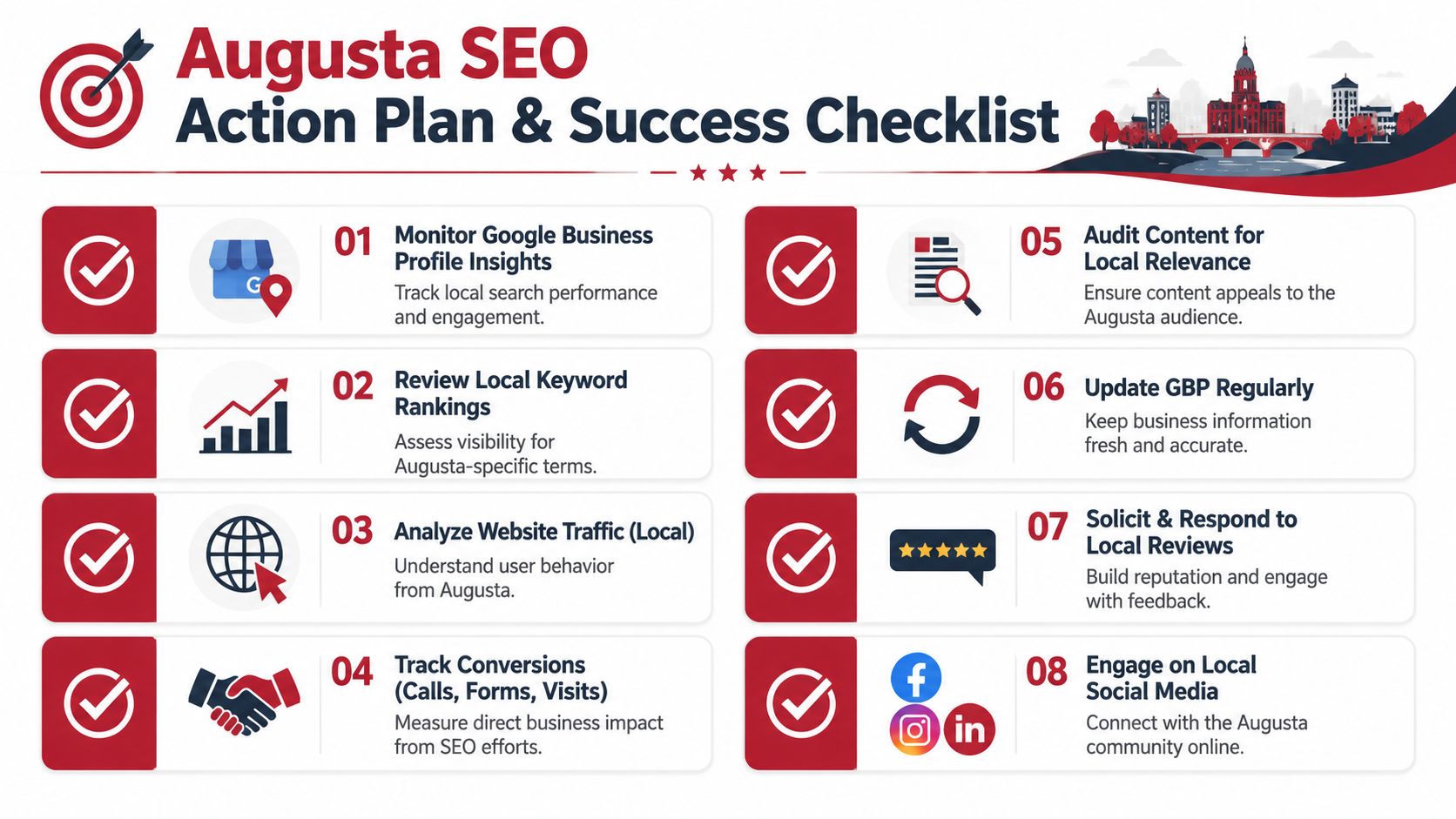
Use a practical Augusta SEO checklist
The order matters. High-impact fixes should come before expansion. A sound workflow is to establish baselines, then fix the issues most likely to suppress performance, such as technical faults, weak click-through pages, broken links, page-speed problems, and mobile responsiveness, before investing heavily in content growth or link acquisition. That sequencing follows Walker Sands' SEO strategy guidance.
A clear Augusta action list looks like this:
- Set baseline KPIs first. Record current organic traffic, rankings for target terms, and conversions.
- Fix the storefront. Complete and refine the Google Business Profile.
- Repair technical friction. Broken links, slow pages, and mobile issues can suppress everything else.
- Improve weak SERP pages. Rewrite titles and descriptions on pages getting impressions but weak clicks.
- Build one strong local page per core service. Don't spread effort across thin duplicates.
- Publish authority content tied to buyer questions. Focus on topics that help someone choose, not just browse.
- Clean up citations. Make business details consistent wherever the brand appears.
- Earn local links through actual community participation. Partnerships beat random outreach.
- Review the data regularly. Adjust based on what attracts qualified traffic and conversions.
Good SEO in Augusta isn't a pile of disconnected tasks. It's a system that turns local visibility into trust, and trust into action.
Get Up Productions helps brands turn podcast content into search-ready assets that support authority, visibility, and lead generation. Businesses that want a content engine built around recorded expertise can explore Get Up Productions for podcast production, YouTube optimization, show notes, and repurposed content workflows.