
A lot of podcast teams hit the same wall. Episodes go out on time, guests are solid, downloads look respectable, and nothing meaningful changes in the pipeline. No jump in qualified inquiries. No clear increase in booked calls. No reliable way to tell whether the show is helping the business or just producing activity.
That usually isn’t a content problem. It’s a destination problem.
A podcast landing page gives each episode a place to do actual work. Instead of sending people to a generic Apple Podcasts listing, a Spotify page, or a cluttered archive, it gives listeners one focused next step. For B2B shows, that step might be booking a consultation, downloading a resource, joining an email list, watching the full video version, or exploring a related service page.
Table of Contents
- Your Podcast Needs More Than Just Downloads
- The Anatomy of a High-Converting Podcast Page
- Crafting Copy That Captivates and Converts
- Choosing Your Player and Subscription Options
- SEO and Analytics to Fuel Your Growth
- Common Questions About Podcast Landing Pages
Your Podcast Needs More Than Just Downloads
A podcast can look healthy on paper and still fail commercially. That’s the trap. Teams celebrate listens, then realize they can’t trace a single client conversation back to a specific episode.
That approach breaks down in a crowded market. As of November 2025, there were over 4.5 million active podcasts, yet 46% of podcasters still rely on downloads as their primary success metric, even though real performance comes from turning listeners into site traffic, leads, and clients through a dedicated page strategy, according to Content Allies' B2B podcast statistics.
A strong podcast landing page fixes that by giving every episode a business function. It becomes the place where listeners move from passive consumption to measurable action. Instead of asking whether an episode was “popular,” the better question becomes whether it drove the right behavior.
Downloads don't show business impact
Downloads can indicate reach. They don’t show buyer intent on their own.
A listener may hear a full episode while driving, remember the host, and visit the brand later through direct traffic. If there’s no dedicated destination, that visit gets mixed into the rest of the site and the episode loses credit. If there is a dedicated page, the team can map that journey more clearly and tie content to outcomes.
Practical rule: If a host mentions an episode, guest, or offer on-air, that mention should point to a page built to capture intent.
That page needs more than an audio embed. It should include a clear CTA, a useful summary, supporting assets, attribution tracking, and a reason for the visitor to stay on the site instead of bouncing back to an app.
A landing page is part of the marketing system
The most effective podcast teams don’t treat episode pages like an administrative task. They use them as campaign assets.
That means the page sits inside a broader system with email, social clips, video versions, transcripts, internal links, and CRM tracking. Teams building a stronger podcast marketing strategy usually get more value from the same episode because every promotional touchpoint leads back to a controlled destination.
A useful working model looks like this:
- Listener hears the episode: They get a direct verbal CTA with an easy URL.
- Visitor lands on one focused page: The page reinforces the same promise made in the episode.
- The page offers a next action: Book, subscribe, download, watch, or reply.
- The team tracks what happened: UTMs, forms, and source fields connect the episode to pipeline activity.
That’s the difference between publishing a show and building a channel.
The Anatomy of a High-Converting Podcast Page
Most podcast pages fail for a simple reason. They’re built like archives, not landing pages.
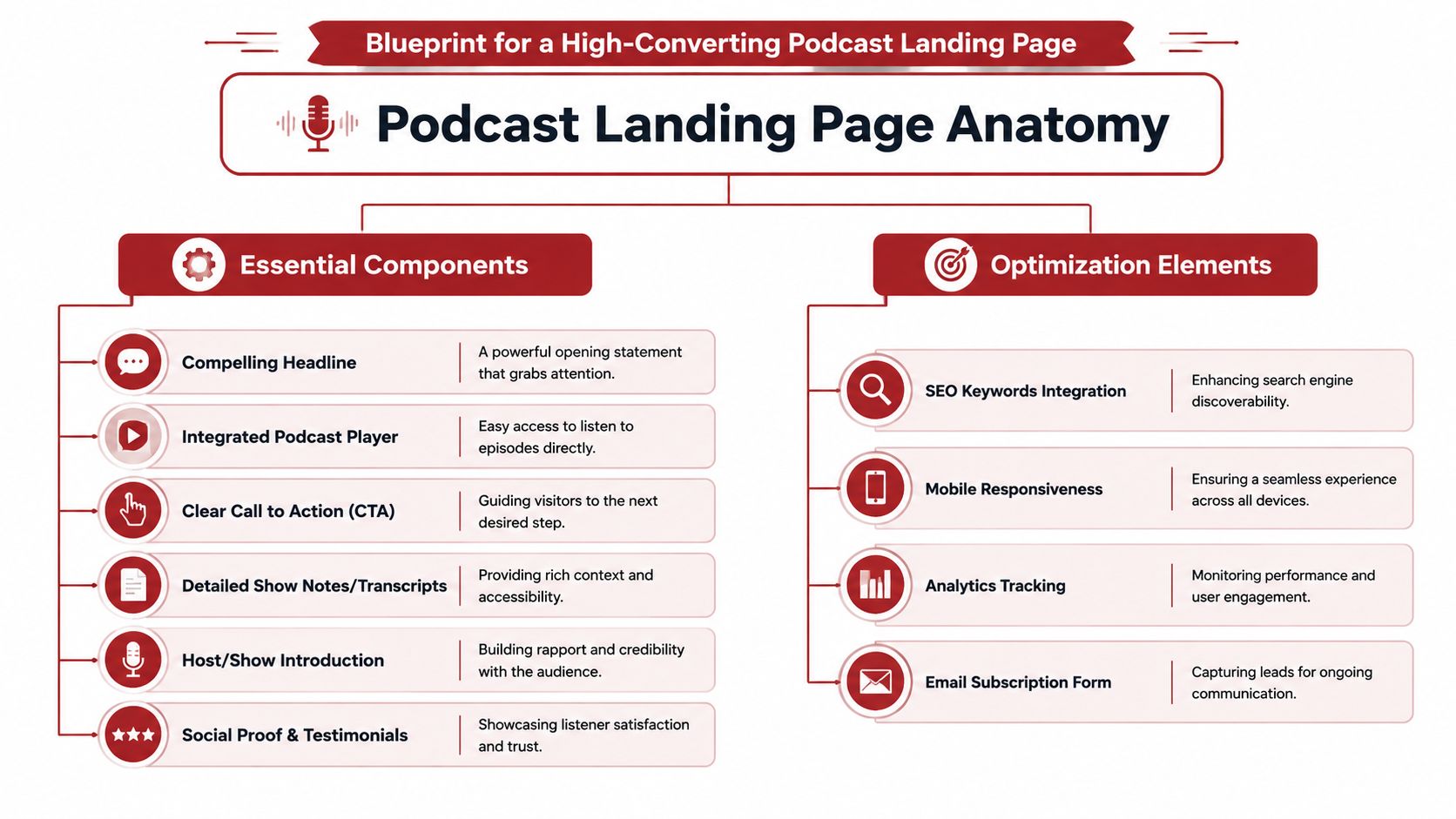
The default layout on many sites is a title, an embedded player, a block of generic show notes, and a row of platform badges. That works if the only goal is distribution. It doesn’t work if the page needs to convert a listener who already trusts the host enough to take another step.
Start above the fold with intent
The top of the page needs to answer three questions fast. Why should this episode matter, what should the visitor do next, and can they watch or listen immediately?
That’s where video is often undersold. With video podcast consumption surging 150% from May 2025 to May 2026, pages that only offer audio are outdated. The same source notes that video hooks, YouTube embeds, and chapter markers can triple dwell time and increase conversions by up to 30% for authority-building brands, based on TAAP's examples of podcast landing pages.
For a B2B episode page, the above-the-fold stack should usually include:
- A benefit-led headline: Not just the guest name or episode number. Lead with the problem solved or outcome discussed.
- A short video hook: A cinematic clip, strong quote, or sharp argument from the episode.
- One primary CTA: Book a call, get the resource, or watch the full conversation.
- A lightweight player option: Some people want to listen right away. Make that easy.
Teams that want to drive results with strategy usually make one key shift here. They stop asking what belongs on a podcast page and start asking what a specific visitor should do within the first few seconds.
Build the middle of the page for decision-making
Once the visitor scrolls, the page should reduce uncertainty. This is where structure matters.
A strong middle section usually includes:
Key takeaways
Short bullets outperform long recap paragraphs for scanning. Especially on mobile, a visitor wants to know whether the episode is worth the next half hour.
Guest context
A guest bio shouldn’t read like a conference intro. It should explain why this person is worth listening to on this topic.
Transcript access
The transcript should be visible on-page or easy to expand. Don’t hide it behind a PDF.
Related resources
Link to the blog post, case breakdown, service page, or downloadable asset that extends the conversation.
A landing page should feel like a guided path, not a storage container for episode assets.
Finish with a single next step
The bottom of the page is where many conversions die. Teams often add too many options. Follow on Spotify. Subscribe on Apple. Visit LinkedIn. Read more episodes. Check the homepage. Contact the company. That creates friction.
A stronger close gives one clear action and one secondary path. That’s enough.
A simple wireframe for the lower section looks like this:
| Section | Purpose | What to include |
|---|---|---|
| Primary CTA block | Capture high intent | Booking button, form, or download |
| Social proof | Reduce hesitation | Brief testimonial, credibility cue, or notable guest context |
| Related content | Keep the visitor engaged | One or two relevant links, not a full archive |
| Subscription option | Support future listening | Smart link or one consolidated follow option |
A high-converting podcast landing page doesn’t need more parts. It needs the right parts in the right order.
Crafting Copy That Captivates and Converts
Good layout gets the visitor to stay. Good copy gets the visitor to act.
Most podcast pages don’t have bad writing because the team lacks skill. They have bad writing because the copy was treated like admin work. The title was pulled from the recording doc, the summary was written like a meeting recap, and the CTA was added at the last minute.
Weak copy sounds like show notes
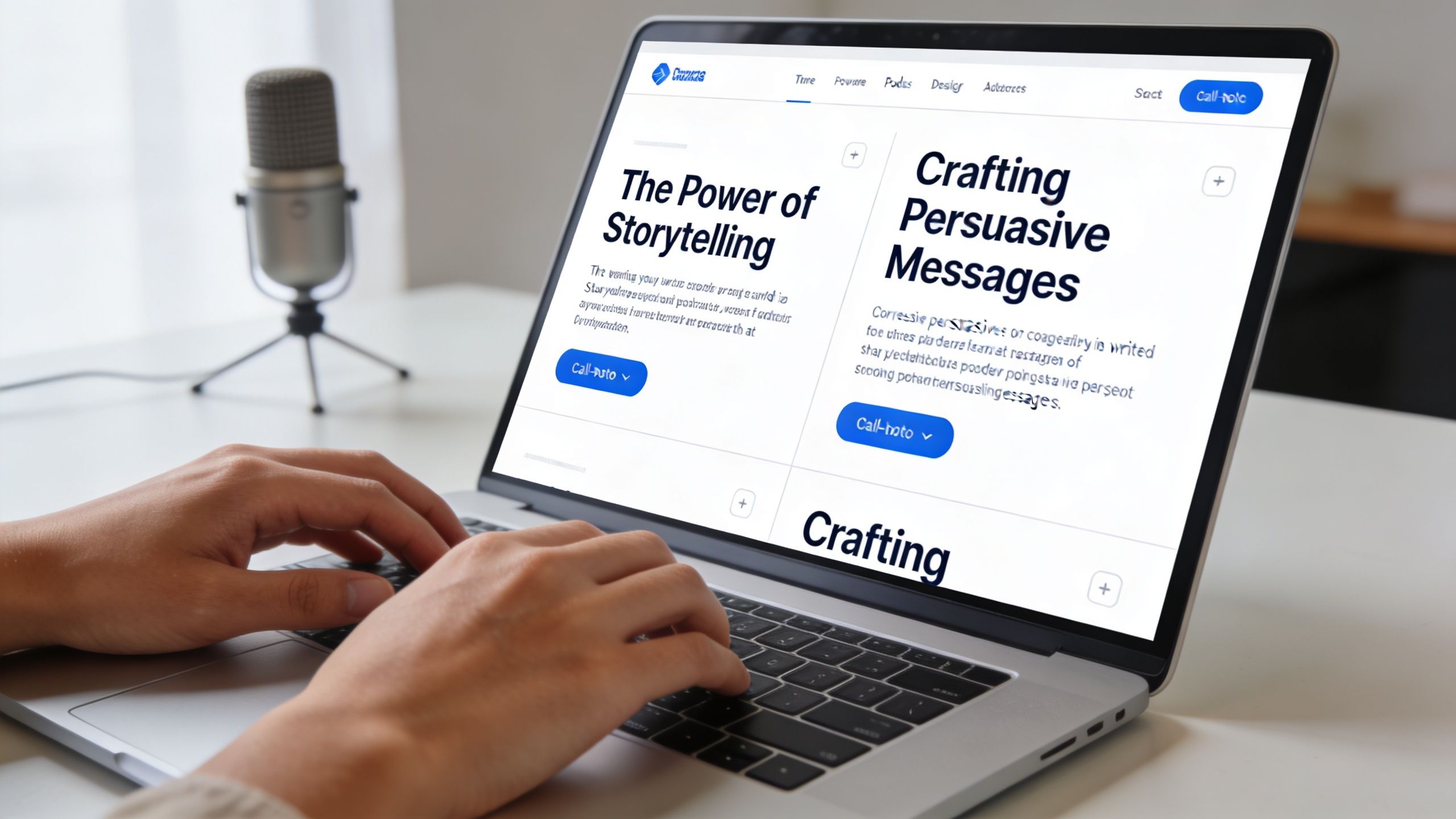
A generic episode page often reads like this:
In this episode, the host talks with Jane Smith about leadership, team growth, and marketing strategy.
That tells the visitor almost nothing. It doesn’t create curiosity, urgency, or relevance.
A stronger version sounds more like this:
Jane Smith explains why growing a service firm often breaks delivery before it improves revenue, and how leadership teams can fix the handoff between sales and operations before client experience slips.
The difference is specificity. Strong copy names the tension, not just the topic.
A practical rewrite pattern works well here:
Weak title: Episode 42 with Jane Smith
Better title: Why Service Firms Outgrow Their Delivery Process Before They Notice
Weak summary: A conversation about marketing and leadership
Better summary: A candid breakdown of the operational bottlenecks that appear when a founder-led business starts scaling
Weak CTA: Learn more
Better CTA: Book a strategy call to fix the same handoff issues discussed in this episode
For teams refining page intros and hooks, Sight AI's high-converting copy tips are a useful reference because they focus on clarity and momentum instead of decorative language.
The CTA has to match the episode
The biggest copy mistake on a podcast landing page is mismatch. The host says one thing in the episode. The page says another. The visitor lands on the page and has to reinterpret the offer.
That hurts conversions. According to the HubSpot finding cited by Adopter Media's guide on podcast and YouTube landing pages, companies that align landing page messaging and offer with their advertising see a 55% higher conversion rate. For podcasters, that means the on-air CTA should match the headline and CTA on the page as closely as possible.
Here’s the operational rule. If the host says, “Go to brand.com/assessment to get the checklist,” the page headline shouldn’t switch to “Book a discovery session.” It should deliver the checklist first, then offer the next step.
A few copy moves consistently help:
- Repeat the promise: Use the same wording from the episode intro or ad read.
- Keep the CTA verb specific: Book, watch, download, apply, or subscribe.
- Write for the skim: Short paragraphs, subheads, and bullets beat dense recap text.
- Use guest authority carefully: Mention relevant expertise, not a bloated biography.
This kind of walkthrough is useful when teams need to hear what matched messaging sounds like in practice:
A final note on guest bios. They should support the episode’s credibility, not hijack the page. One short paragraph tied to the listener’s problem is enough. The page isn’t a press kit. It’s a conversion asset.
Choosing Your Player and Subscription Options
The player matters, but not for the reason often assumed. The goal isn’t to show off a sleek embed. The goal is to support the action the page is built for.
That means the best player is the one that creates the least friction for the visitor while preserving the brand experience. In some cases, that’s a simple native embed from Spotify or Apple Podcasts. In others, a custom player on the site gives more control over design, supporting copy, and what the visitor sees next.
Pick the player based on the job
A basic decision framework works better than feature-chasing.
If the page’s main job is fast playback, native embeds are often enough. If the page’s job is lead capture, brand continuity, and on-site engagement, a custom setup usually gives more room to shape the journey.
Here’s a practical comparison:
| Player | Email Capture | Custom Branding | Best For |
|---|---|---|---|
| Spotify embed | No native on-page capture | Limited | Quick playback and familiarity |
| Apple Podcasts embed | No native on-page capture | Limited | Audiences already deep in the Apple ecosystem |
| YouTube embed | Indirect only through surrounding page elements | Moderate | Video-first episodes and chapter-based viewing |
| Captivate player | Can support broader on-page lead flow through surrounding modules | Stronger control | Branded episode pages on a company site |
| Fusebox | Can fit into content-driven pages with email elements nearby | Stronger control | Content marketers who want player styling inside blog-style layouts |
The key is placement. Even the best player underperforms if it sits above three competing CTAs or below a wall of text.
Teams building video-first shows usually get better results when they treat YouTube as part of the page experience, not the entire experience. For anyone evaluating that route, this guide on starting a video podcast is a useful reference for the production decisions that affect what ends up on the landing page.
Subscription links need hierarchy
Many podcast pages still use the old icon farm. Apple, Spotify, YouTube, Amazon Music, Overcast, Pocket Casts, and more all stacked together. It seems complete, but it also forces the visitor to choose too early.
A cleaner approach is usually better:
- Primary button first: “Listen on your preferred app” or “Follow the show.”
- Expanded options second: A smart link page or modal for platform selection.
- Individual badges lower on the page: Useful for users who want them, but not necessary at the moment of highest intent.
Operational note: The more choices a listener has to process before clicking, the more likely they are to postpone the decision.
That same rule applies to “subscribe” language. If the page is aimed at business outcomes, the subscription path should support the main CTA, not replace it. A B2B podcast landing page should help the listener follow the show and move deeper into the brand’s ecosystem.
SEO and Analytics to Fuel Your Growth
A podcast episode can become searchable, linkable, and measurable long after the release week. That only happens when the page is built as a content asset, not just a publishing container.
The missed opportunity on most podcast landing pages is simple. The team posts a player and summary, then puts the transcript in a PDF or leaves it out entirely. That throws away search value and makes repurposing harder than it needs to be.
Publish the transcript on the page
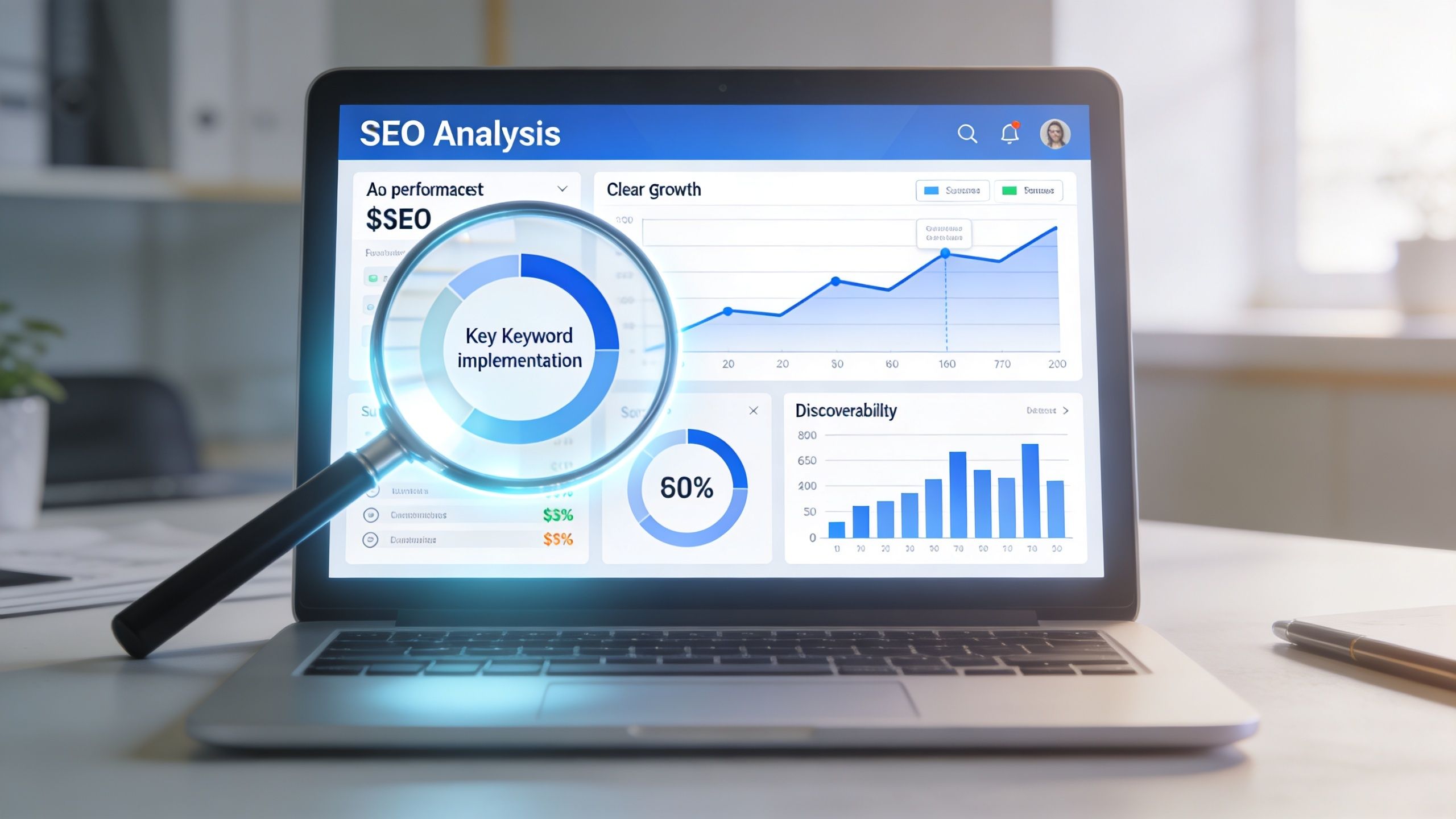
Podcast landing pages gain real SEO value when the full transcript is published as searchable HTML text. That makes the page useful to search engines and to visitors who want to scan before they commit. It also opens the door to repurposing each episode into 3 to 5 supporting assets and creating 4 to 6 internal linking opportunities from the main page, according to Quill's guide on branded podcast landing pages.
That matters because transcripts do more than add word count. They surface relevant phrases, guest terminology, and long-tail search intent that short show notes usually miss.
A transcript section works best when it’s handled like content, not an afterthought:
- Clean the text: Remove obvious transcription errors and filler clutter.
- Add jump links: Help visitors move to the section they care about.
- Use proper headings: Break the transcript into readable sections.
- Link key mentions: Connect tools, services, and related articles inside the text.
Turn one episode into a content cluster
The strongest podcast teams don’t stop at the episode page. They build a cluster around it.
One conversation can generate a recap article, a short Q&A post, several video clips, quote graphics, and a follow-up email. Each asset points back to the main episode page, and the main episode page links back out to the supporting assets. That creates a tighter internal web of relevance and gives the audience multiple ways to enter the same topic.
A structured repurposing model pays off. A documented content repurposing strategy helps teams avoid the common mistake of creating disconnected snippets that never reinforce the original landing page.
For marketers looking for additional channel ideas around episode promotion, TimeSkip's tips for podcast growth are a useful complement because they focus on extending reach beyond the initial publish moment.
Publish the episode once. Build the discoverability around it for weeks.
Track the path, not just the click
Analytics on podcast pages should answer one question. Which episodes move people closer to revenue?
That requires basic discipline:
- Use UTM parameters on promotional links from email, guest shares, social posts, and paid campaigns.
- Add a source field on forms so visitors can self-report that they came from the podcast.
- Track page-level conversions such as bookings, form fills, and resource downloads.
- Review assisted conversions inside analytics tools, not just last-click activity.
A team doesn’t need a complicated dashboard to start. It needs consistent naming, clean links, and a habit of checking what the strongest episodes produce after publication.
Common Questions About Podcast Landing Pages
The questions that come up during implementation are usually practical, not theoretical. Which page structure should exist. Which platform should host it. What should a guest receive to help promote it.
Do you need a show page and episode pages
Yes. Most brands need both.
The show page acts as the central hub. It explains what the podcast is, who it serves, and where to follow it. The episode pages do the conversion work. They target a specific topic, guest, or problem and give the marketing team something precise to promote.
If a team only has a show page, it loses topical relevance and makes campaign attribution harder. If it only has episode pages, it loses the broad front door for new listeners.
Which platform should you build on
The best platform is the one the team will maintain properly while keeping the mobile experience clean. With 82% of podcast listening happening on mobile devices, a mobile-first page is essential, as noted in Backlinko's podcast stats roundup.
A practical decision filter helps:
- WordPress: Best when the team wants flexibility, stronger SEO control, and deeper customization.
- Squarespace: Good for simpler marketing sites where speed and ease matter more than advanced content architecture.
- Podpage or hosting-based page builders: Useful when the team wants something fast and podcast-specific, but they can feel limiting for brands that need stronger lead generation flows.
The wrong choice usually isn’t about features. It’s about friction. If the page is slow, cramped on mobile, or hard to update after every episode, the system breaks.
What should go in a guest promo kit
A guest promo kit should make sharing easy. It doesn’t need to be elaborate.
A useful kit includes:
- The episode landing page link: One clean URL, not a list of platform links
- Short promotional copy: A few post-ready captions the guest can adapt
- Approved visual assets: A branded image, quote card, or short clip
- Clear guidance: Tell the guest which page to share and why
That last part matters. If guests send people to random platform listings, the brand loses the chance to capture traffic and conversions on its own site.
A podcast should do more than publish conversations. It should create a path from attention to action. Get Up Productions helps brands build video podcast systems that don’t stop at production, with cinematic episodes, repurposed content, and marketing infrastructure designed to turn listeners into leads, clients, and long-term audience growth.