
The most useful way to understand the rise of ott platforms is to stop treating it like a Hollywood story. It's a distribution story. The global OTT market moved from about $238 billion in 2021 to an estimated $352.96 billion in 2026, while traditional linear television is projected to fall from $231 billion in 2021 to $222.1 billion in 2026, according to TVScientific's OTT statistics roundup. That shift changes where attention lives, how viewers discover content, and what brands can do with a well-produced video podcast.
For entrepreneurs, consultants, authors, and B2B teams, OTT isn't just Netflix, Hulu, or Prime Video. It's the broader habit of watching video through internet-delivered platforms on phones, laptops, smart TVs, and streaming apps. That matters because authority now gets built where people already spend time watching, searching, and sharing.
A brand doesn't need to become a media company with a studio lot and a slate of scripted shows. It needs a repeatable video system, a clear point of view, and a distribution plan that matches how modern viewers behave.
Table of Contents
- The OTT Revolution Is Here
- Understanding the OTT Ecosystem
- How OTT Platforms Make Money and Create Opportunity
- Decoding Modern Viewer Behavior
- Your Playbook for OTT Content and Lead Generation
- Measuring Success and Distributing Your Content
- Your Turn to Go Over The Top
The OTT Revolution Is Here
OTT is no longer a side channel. For brands publishing video, it is now one of the clearest routes to reach audiences on their own terms.
The old TV model forced brands into fixed schedules, paid placement, and gatekeepers. OTT changed the economics of distribution. A founder, consultant, or B2B team can publish directly to the platforms people already use and build an audience over time instead of buying every impression from scratch.

This shift means brand video needs a different strategy. The goal is not to imitate Netflix or chase a prestige placement. The goal is to create a repeatable content asset that earns attention, builds trust, and supports business outcomes such as qualified leads, sales conversations, and customer education. Teams working through that change often benefit from a clearer approach to marketing and media strategy before choosing formats, release cadence, or distribution channels.
For video podcasters, the opportunity becomes practical. A strong show with a clear point of view, reliable production, and a defined audience can compete for attention without operating like a television network. In many cases, consistency beats scale. A focused weekly show for decision-makers in one industry will usually produce more business value than a broad, expensive series with no path to conversion.
Brands that want more control can also study what it takes to own a streaming environment instead of relying only on rented distribution. That is where platform insights with Muvi One can help frame the operational side of building and managing your own app or content hub.
OTT has changed what is possible. For brand builders, the core shift is simple: video podcasting can now function as a media asset, a trust engine, and a lead-generation channel at the same time.
Understanding the OTT Ecosystem
OTT is distribution, not a single platform
People often talk about OTT as if it were one destination. It isn't. It's a delivery model. Video reaches viewers over the internet across connected TVs, mobile apps, browsers, and streaming devices, and each environment comes with different audience expectations.
That matters because a video podcast can live in several OTT contexts at once. A full episode may perform well in a YouTube TV app, clips may travel through short-form feeds, and a branded library may live inside a custom app or member portal. Teams evaluating that route can get practical platform insights with Muvi One to understand what owning a streaming environment can involve.
Think of OTT like digital real estate
A simple way to make sense of the ecosystem is to picture different kinds of real estate.
SVOD works like a gated community. People pay to enter, so they expect a premium experience and a cleaner environment. Content here usually needs a stronger reason for ongoing subscription value.
AVOD feels more like a public park with billboards. Entry is easy, attention is broad, and advertisers help pay for access. In this environment, discoverability often improves for creators who need reach more than exclusivity.
TVOD acts like a movie theater box office. Viewers pay for a specific title or event. It's useful when the content has a clear one-time purchase value, such as a training series, a virtual summit replay, or special-access event content.
A practical brand strategy starts by asking which environment matches the audience's intent.
- If the goal is authority building, open and searchable environments usually outperform closed ones.
- If the goal is premium access, a paid library or member experience can work better than broad distribution.
- If the goal is lead generation, content should reduce friction first, then create a reason to opt in later.
- If the goal is community depth, repeated episodes and recurring formats usually beat one-off releases.
Practical rule: Don't choose a platform because it sounds prestigious. Choose the environment that matches how the audience discovers, evaluates, and trusts expertise.
Many brand builders overcomplicate things; they assume OTT means chasing big-platform placement. In practice, the better question is where a prospect is willing to spend time with longer-form expertise. For many businesses, the strongest play is to use accessible OTT-style channels as discovery engines, then move the most engaged viewers into email, sales conversations, webinars, or private content hubs.
How OTT Platforms Make Money and Create Opportunity
The monetization model isn't a background detail. It shapes who gets discovered, what viewers tolerate, and how brands can participate. A strategist who ignores the revenue model will usually misread the platform.
The business model shapes the opportunity
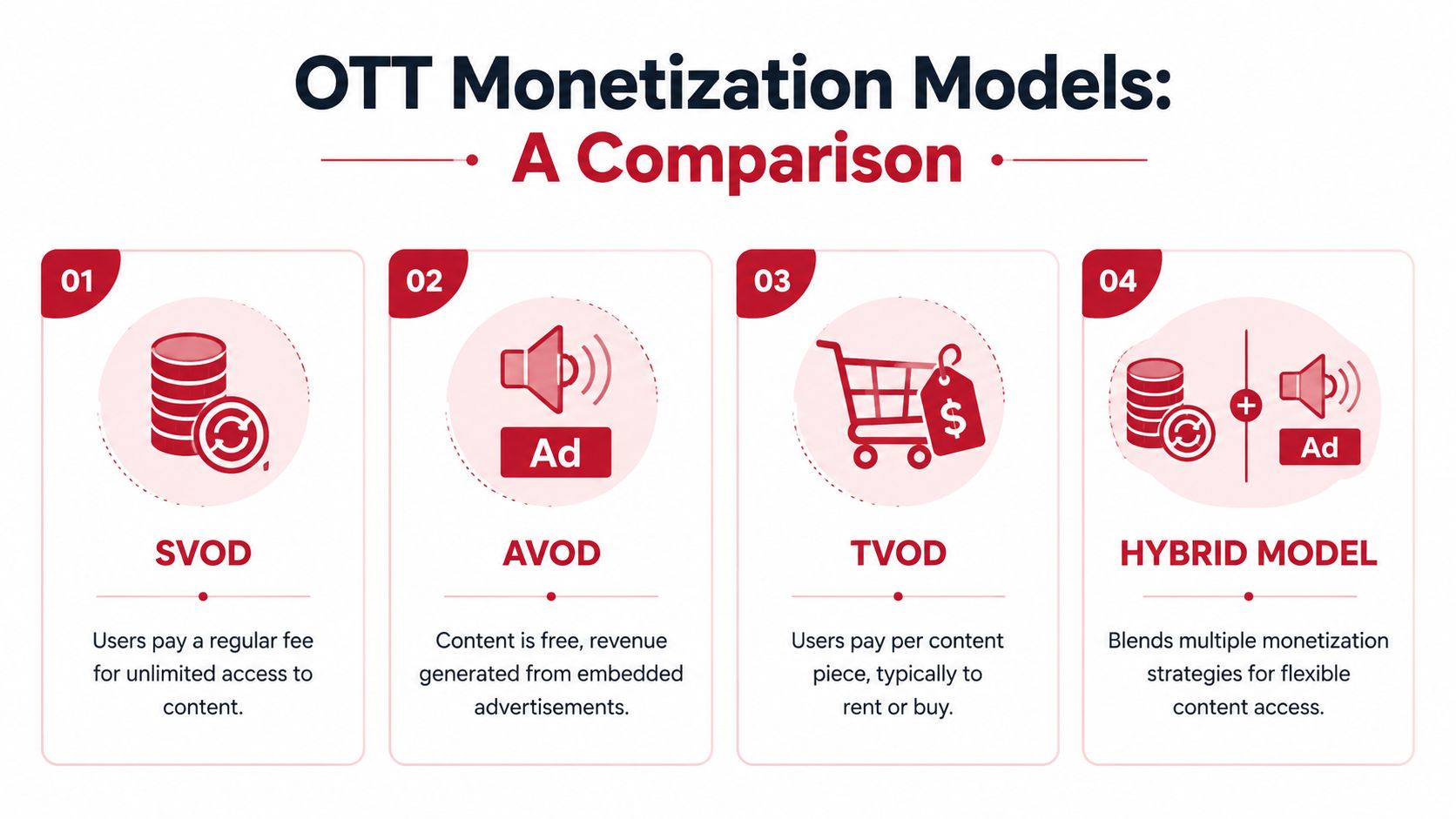
According to Mordor Intelligence's OTT market research, SVOD led with 46.12% revenue share in 2025, but hybrid models that combine subscriptions with advertising are the fastest-growing segment, expanding at a 12.81% CAGR. For brand builders, that matters because hybrid and ad-supported environments create more room for sponsorships, branded integrations, and audience-building without asking viewers for maximum commitment upfront.
SVOD platforms reward retention. AVOD platforms reward scale and engagement. TVOD rewards specificity and clear buyer intent. Hybrid models sit in the middle and often create the most flexible commercial environment.
A B2B video podcast usually benefits from that flexibility. It may not need direct subscription revenue at all. Its economic value can come from leads, sales conversations, partnerships, speaking invitations, or client education. In other words, the show doesn't have to monetize like entertainment media to be commercially successful.
A short explainer can help visualize how the models differ in practice.
Comparison of OTT Monetization Models
| Model | How It Makes Money | Example | Opportunity for Brands |
|---|---|---|---|
| SVOD | Recurring subscription payments | Premium member library or paid content hub | Deepen loyalty with exclusive interviews, training, or thought leadership series |
| AVOD | Advertising around free content | YouTube-style ad-supported distribution | Build reach, attract new viewers, and create sponsorship inventory |
| TVOD | One-time rental or purchase | Paid event replay or special masterclass | Package premium content around launches, workshops, or niche expertise |
| Hybrid | Mix of subscription and advertising | Ad-supported tier plus premium access | Use free content for discovery and paid access for deeper conversion |
What tends to work for brand builders
A common mistake is trying to force one monetization model onto every show. That usually leads to weak distribution or weak economics.
What works better is alignment:
- Discovery content first: Publish broad, useful episodes where viewers can find them with low friction.
- Premium depth second: Offer deeper frameworks, workshops, or private archives for the audience that wants more.
- Sponsor fit matters: A small niche audience with strong trust can be more commercially useful than a broad audience with weak engagement.
- Lead value often beats media value: For many firms, a handful of qualified conversations can matter more than ad revenue.
That's why the rise of ott platforms should interest more than publishers and networks. It gives businesses multiple ways to package the same expertise, depending on whether the next goal is visibility, engagement, or revenue.
Decoding Modern Viewer Behavior
The modern viewer doesn't think in channels. The viewer thinks in moments. Commute, desk break, evening sofa, conference travel, weekend catch-up. Content wins when it fits those moments cleanly.
Viewers don't separate screens the way marketers do
A prospect might discover a short clip on a phone, save the full episode for later, and finish it on a TV app. That's one viewing journey, even if the reporting dashboard slices it into separate categories. The operational lesson is simple. A brand's video podcast has to feel coherent across devices, not just look good in one aspect ratio.
Subtitles, framing, and audio consistency matter more than many teams realize. If an episode is hard to follow on mute in a feed, the first touch fails. If captions are clumsy or absent, the experience gets worse on every screen. Teams tightening accessibility and watchability can learn from this practical HypeScribe guide to Prime subtitles, because subtitle quality affects comprehension, retention, and perceived professionalism.
Authenticity beats polished emptiness
OTT habits also changed what audiences accept from expert-led content. People still appreciate strong production, but they don't need a show to feel like cable news. They need it to feel credible, clear, and worth their time.
That's why video podcasts have become such a strong format for authority building. A founder explaining a market shift, a consultant unpacking a client mistake pattern, or a nonprofit leader interviewing partners can hold attention when the conversation delivers genuine specificity. Overproduced intros, generic talking points, and inflated brand language usually push viewers away.
A few creative choices make a difference:
- Open with a sharp point: Don't spend the first minute warming up.
- Use visible structure: Segments, chaptering, and on-screen prompts help viewers stay oriented.
- Edit for meaning, not vanity: Remove dead air and repetition, but keep the human texture.
- Design for multiple contexts: A clip should work in-feed, and the full episode should reward deeper viewing.
Viewers will forgive a less elaborate set. They won't forgive a slow, vague episode that wastes attention.
This behavioral shift is why niche expertise can travel so well in OTT environments. The audience isn't asking whether the host looks like a broadcaster. The audience is asking whether the host understands the problem better than anyone else.
Your Playbook for OTT Content and Lead Generation
The strongest response to the rise of ott platforms isn't “be everywhere.” It's “build once, distribute intelligently.” Video podcasts work when the production system supports that reality.
Start with a flagship episode
Every effective content system needs a source asset. For most brands, that's a well-planned long-form video podcast episode. Not because long form is automatically better, but because it captures the richest version of the brand's thinking.
A strong flagship episode usually includes a focused topic, a host with a clear point of view, a guest or framework worth unpacking, and clean visual and audio production. The episode should answer a real buyer question, not just fill a publishing calendar.
That source episode becomes the strategic center of gravity. Everything else comes from it.
Build a Content Waterfall, not a content treadmill
The best-known practical advantage for smaller creators is repurposing. According to Vocal's analysis of OTT impact on creators, niche creators can bypass OTT gatekeepers with Content Waterfall strategies that turn one episode into 20+ short-form assets, which can boost YouTube Shorts views by 3x and lead generation by up to 40% for B2B firms.
That changes the math for a lean team. Instead of producing separate assets from scratch every week, the team extracts multiple formats from one strong recording. A fuller content repurposing strategy shows how to operationalize that approach without turning the process into chaos.
A practical waterfall often looks like this:
Record one authority episode
Choose one topic that aligns with a real commercial theme, such as a service line, category pain point, or recurring objection from buyers.Cut short-form clips with different jobs
One clip hooks attention. Another teaches one tactical lesson. A third addresses a common misconception. They shouldn't all say the same thing with different captions.Pull audio for podcast feeds
Some prospects will never watch the full video, but they'll listen while working, commuting, or walking.Extract written assets
Turn the episode into a newsletter, article summary, quote graphic, sales enablement snippet, or FAQ answer.Build a searchable episode page
Add a useful title, a clear summary, timestamps, and a call to action that matches the episode topic.
Field note: Repurposing fails when teams treat every clip like a trailer for the full episode. The clip should be useful on its own, then create curiosity for what comes next.
Turn attention into leads
Lead generation doesn't happen because content exists. It happens because the content creates a next step that feels natural.
For a B2B firm, that next step might be a consultation request, a webinar registration, a lead magnet, or a reply to an email. For a speaker or author, it might be a booking inquiry or newsletter signup. For a nonprofit, it might be volunteer interest or donor education.
The strongest pattern is simple:
- Topic aligns with a buyer problem
- Episode gives meaningful clarity
- Call to action offers the next useful resource
- Follow-up tracks who engaged extensively
A video podcast shouldn't try to close every sale inside the episode. It should qualify attention. When a prospect watches multiple clips, listens to a full conversation, and clicks for a related asset, the brand has more than a vanity metric. It has intent.
Measuring Success and Distributing Your Content
Most OTT reporting gets noisy fast. View counts look impressive, but they rarely answer the question the business values most. Did the content create qualified attention and move someone closer to action?
Stop reporting views as if they were outcomes
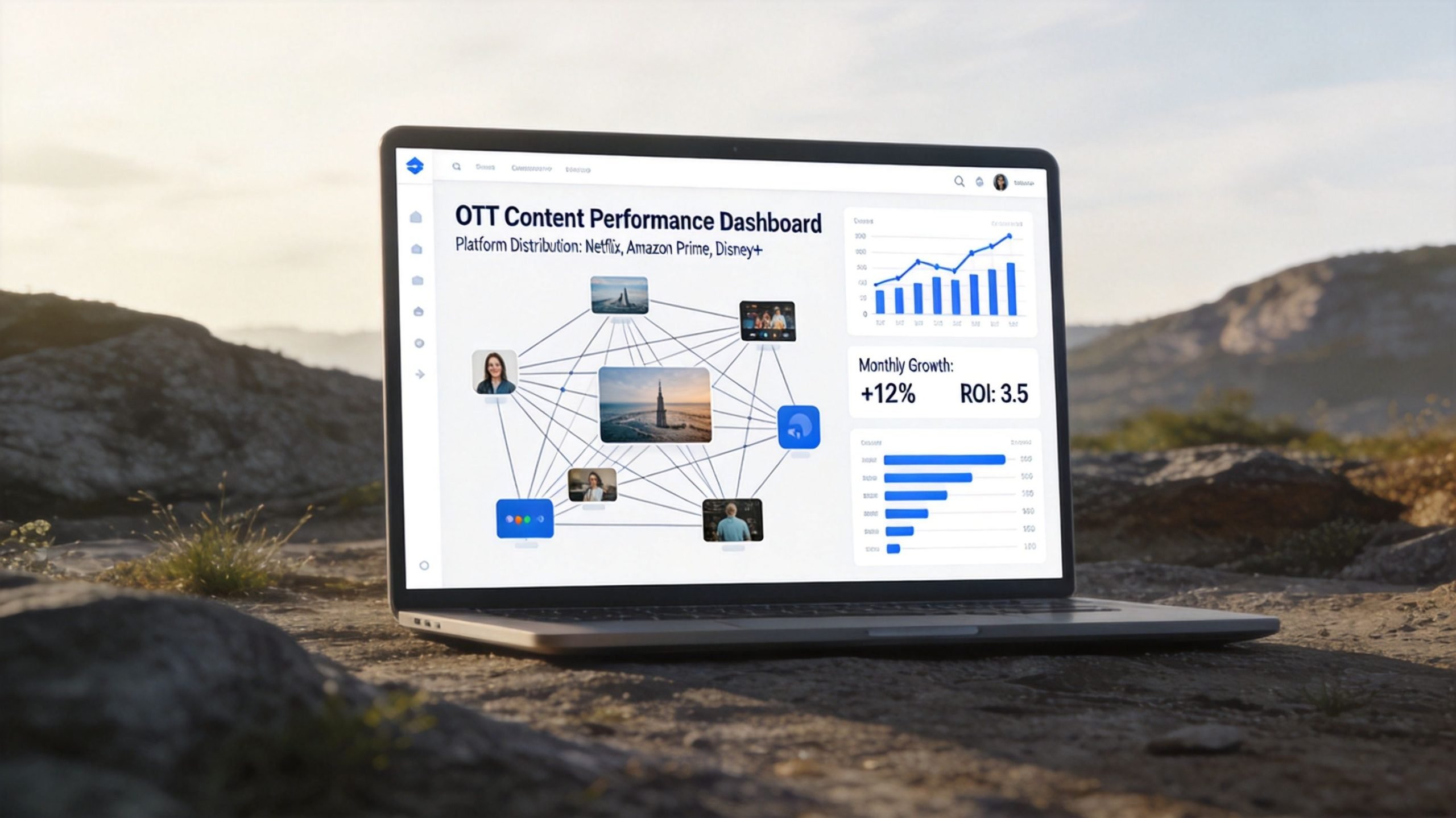
Measurement gets harder in fragmented streaming environments. According to CCR's report on OTT measurement challenges, multi-device tracking fails in 40% of sessions, yet TV app users engage 154% more in live events than web users. That combination tells a useful story. Cross-platform behavior is messy, but high-intent engagement can still be stronger in OTT-style environments.
That's why a sensible reporting stack should prioritize business signals over superficial reach. Teams shaping a stronger video marketing approach for business usually get better results when they treat content metrics as diagnostic signals, not the end goal.
Distribution needs more than one upload button
A lot of brands still publish as if distribution ends when the episode goes live on YouTube. It doesn't. Effective distribution usually combines owned, searchable, and platform-native channels.
Some routes are straightforward. Publish the full episode where long-form viewing makes sense. Cut native clips for short-form platforms. Send the episode to the email list with a sharp reason to watch. Embed the video in a keyword-relevant page or article. Share selected clips with partners, guests, or communities that care about the topic.
Other routes require more curation. A niche OTT app, industry association portal, member community, or event platform may be a better fit than a broad social blast. Especially in B2B, relevance beats generic reach.
What to measure each month
A practical monthly review can stay focused on a small set of indicators:
| KPI | Why it matters | What it reveals |
|---|---|---|
| Qualified leads influenced | Connects content to pipeline activity | Whether the show attracts the right audience |
| Average watch depth on key episodes | Shows true engagement, not just clicks | Whether topics and pacing hold attention |
| CTA conversion by episode theme | Links content to action | Which subjects generate intent |
| Returning viewers or listeners | Signals trust and habit | Whether the show is becoming a relationship asset |
| Sales or donor conversations citing content | Captures real-world influence | Whether the content shapes decisions offline |
The goal isn't perfect attribution. The goal is directional truth. If the right people keep showing up, staying engaged, and entering conversations, the content is working.
That perspective helps teams stay realistic. OTT distribution is fragmented, and the dashboard won't always tell a neat story. But a disciplined mix of qualitative feedback and practical KPIs will show whether the content is building authority or just creating noise.
Your Turn to Go Over The Top
The rise of ott platforms changed more than entertainment. It changed what's possible for brands with expertise, a camera, and a useful point of view. The opportunity isn't reserved for major studios or massive creators. It belongs to businesses that can package their knowledge into consistent, watchable, trustworthy content.
The smartest play isn't to chase every platform or mimic consumer entertainment. It's to build a flagship video podcast, distribute it in platform-native ways, repurpose it into a Content Waterfall, and measure whether that system creates qualified attention. That approach meets modern viewers where they already are while keeping the business goal in focus.
Brands that win in OTT environments usually do a few things well. They respect viewer time. They publish with consistency. They make each episode specific enough to matter. And they create a next step that turns attention into relationship, inquiry, or opportunity.
A lot of teams still treat video like a campaign asset. The stronger move is to treat it like an owned growth channel. That shift is where authority compounds.
If a brand is ready to turn a video podcast into a real growth system, Get Up Productions helps teams design, record, edit, optimize, and repurpose cinematic shows that build authority and generate leads without burying internal staff in production work.