

Every December, the same question lands on the calendar. What should a business send this year, and how can it avoid looking generic, wasteful, or worse, inappropriate?
That pressure is real because holiday gifts for clients sit at the intersection of appreciation, brand perception, budget, and logistics. In the U.S., 79% of Americans said they actively look for holiday discounts when buying gifts, 59% shopped in physical stores, and Adobe reported that the 2025 holiday season became the first quarter-trillion-dollar online holiday season with $257.8 billion spent online from November 1 to December 31, while mobile devices accounted for 56.4% of online holiday revenue according to YouGov's holiday shopping coverage. That matters for business gifting because convenience, timing, and ease of choice usually outperform complexity.
A smart client gift starts with four quick decisions. Define the goal. Set a realistic budget that includes packaging, shipping, and internal time. Consider the recipient's preferences and company policy. Then check ethics and approvals, because a gift that feels thoughtful in one context can create compliance problems in another. For teams that want inspiration before choosing a platform, this guide to discover unique client gift options is a useful complement.
Table of Contents
- 1. Loop & Tie
- 2. Teak & Twine
- 3. Packed with Purpose
- 4. Goldbelly Corporate Gifting
- 5. TisBest Charity Gift Cards
- 6. Sendoso
- 7. Caroo
- Top 7 Holiday Client Gift Comparison
- Executing a Memorable Gifting Experience
1. Loop & Tie
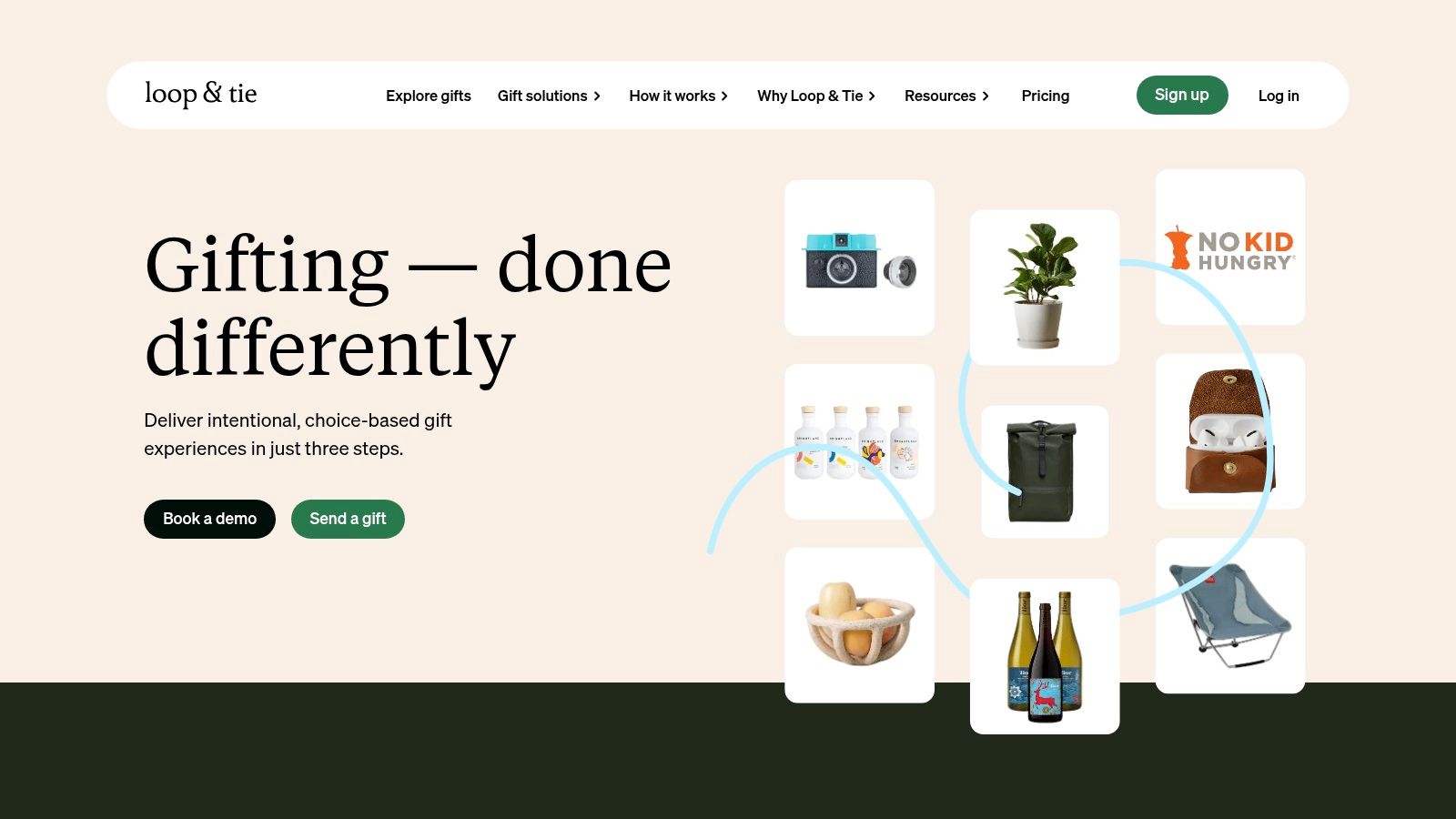
Loop & Tie solves one of the biggest problems in holiday gifts for clients. Most businesses don't know what each recipient wants, and they guess anyway.
Its recipient-choice model is the appeal. A company sets the spend level, sends a branded selection, and the client picks the item they want or chooses a donation instead. That reduces mismatch risk and makes it much easier to send one campaign across mixed client segments, especially when some recipients are long-term partners and others are newer accounts.
Why it works
This platform is strongest when the sender values acceptance rates over heavy curation. It's a better fit than a custom box when the list is broad, distributed, or hard to personalize at the individual item level. It also helps when the sender doesn't want to chase mailing addresses too early or overcommit to a single physical product.
Practical rule: Use Loop & Tie when recipient preference matters more than brand theater.
There are trade-offs. Deep customization and integrations sit further up the product ladder, so the simple version is best for straightforward sends rather than highly orchestrated campaigns. Catalog breadth also changes by tier, which means the experience can feel generous or limited depending on the selected budget.
For service firms, the sweet spot is often a segmented send. Standard clients get a clean recipient-choice experience. Strategic partners get a more customized note and campaign page. Teams building year-end outreach alongside broader retention work can pair gifting with account-based touchpoints and B2B marketing support from Get Up Productions so the gift reinforces an ongoing relationship instead of standing alone.
2. Teak & Twine
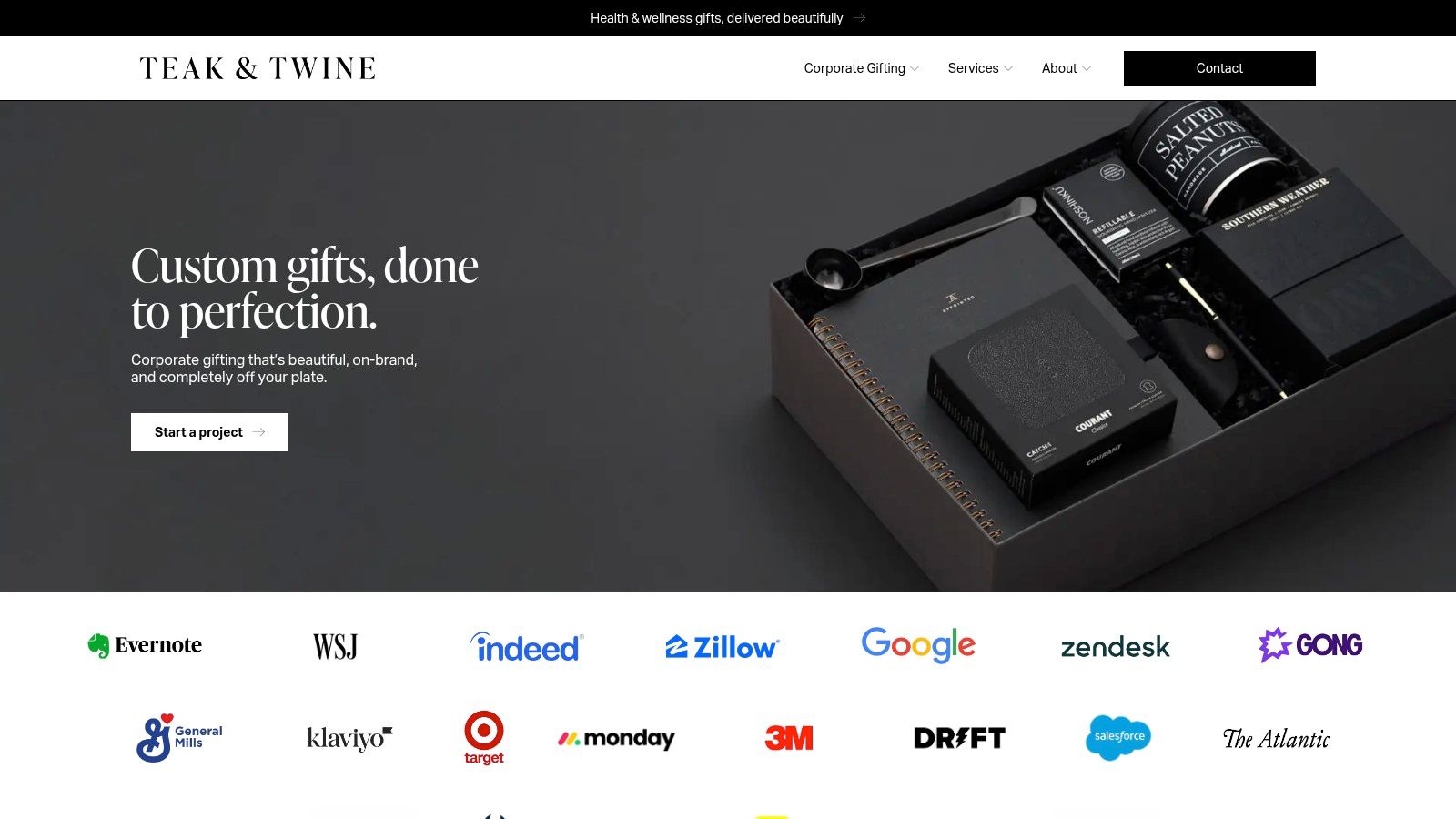
Teak & Twine is for businesses that want the gift itself to communicate quality. Not just the item, but the presentation, insert, packaging, and unboxing.
This matters more than many teams expect. A premium box can reinforce the same message as polished sales materials or a strong client onboarding sequence. It tells the recipient that the company pays attention to detail and doesn't cut corners at the finish line.
Best use case
Teak & Twine fits high-value relationships, executive sends, and moments when visual presentation matters almost as much as utility. Agencies, consultants, and founder-led brands often benefit most because their reputation is tied closely to perception. A strong physical gift can function like a quiet extension of the brand.
Its custom curation process is a major advantage. The team can propose items, packaging directions, and fulfillment plans that feel cohesive instead of assembled from unrelated catalog picks. That's useful when holiday gifts for clients need to reflect a clear aesthetic or support a premium market position.
A forgettable gift usually fails in one of two places. It either feels generic, or it feels overbranded.
The downside is straightforward. Custom work usually needs more lead time, and premium presentation often costs more per recipient than marketplace-style options. That's fine for top accounts, but it's usually the wrong choice for a very wide list unless the sender is prepared for the extra coordination.
For businesses treating gifting as part of relationship development, Teak & Twine works best when tied to a broader account strategy, especially for firms focused on B2B lead generation systems that continue after the holidays.
3. Packed with Purpose
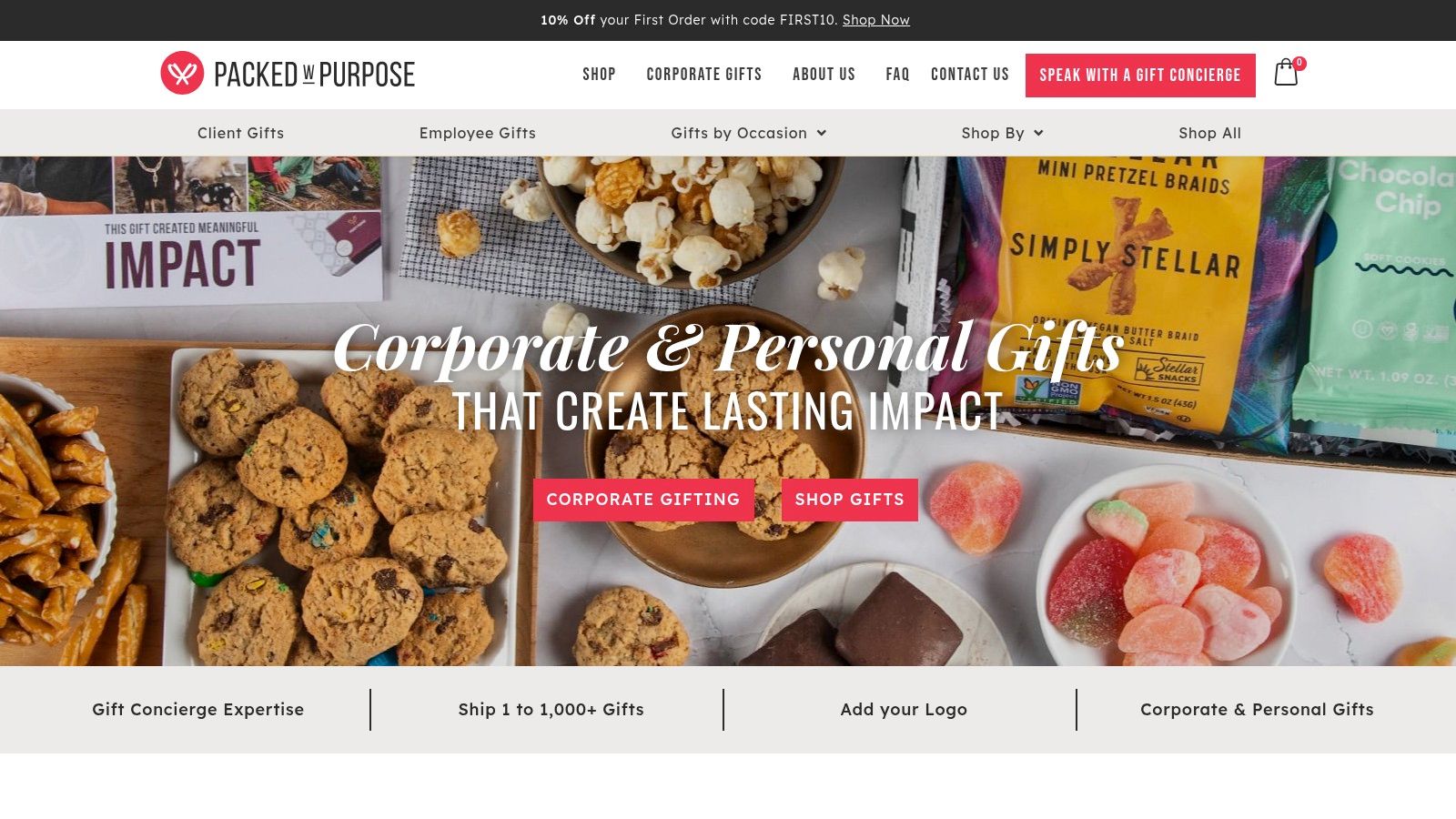
Packed with Purpose stands out when the sender wants a real social-impact story behind the gift. That doesn't mean a generic “gives back” message. It means the products and packaging are part of a sourcing philosophy clients can understand.
That approach is useful for nonprofits, mission-driven consultancies, public-facing founders, and brands that already talk about values in their marketing. If the company spends all year emphasizing community, inclusion, or impact, the holiday gift should match that identity.
Where it fits best
Packed with Purpose works well when the gift needs to start a conversation, not just deliver a treat. The included impact stories help recipients understand why the products were chosen, which can make the gesture feel more thoughtful than a standard snack assortment.
There's also a practical angle. Existing guidance around client gifting often lists donations, books, gift cards, local food, and experience gifts, but it rarely explains which format works for different client segments or how to balance thoughtfulness with scalability. That gap is highlighted in Helply's discussion of customer holiday gift ideas, which notes that personalization and timing may matter more than spend, and references a handwritten note plus a $10 to $15 coffee or bookstore card as a format that can outperform a larger mass-produced item.
This platform isn't the best pick for teams that want to customize every item heavily. Its identity depends on preserving the integrity of the sourcing model. That's a strength for the right sender and a limitation for the wrong one.
For creators and service firms, this type of gift works especially well when paired with thoughtful storytelling in year-end campaigns, client recaps, or brand content production support. The gift lands better when recipients already know what the brand stands for.
4. Goldbelly Corporate Gifting
Goldbelly Corporate Gifting is a different kind of holiday play. It doesn't try to look sleek and restrained. It tries to be memorable.
That's why it works. Regional food gifts from recognizable restaurants, bakeries, and specialty vendors create something shareable. A bagel kit, barbecue package, or bakery shipment often gets opened with a team, photographed, or mentioned in conversation. For many businesses, that reaction is more valuable than a desk accessory.
What to watch before sending food
Food gifts are strongest when the relationship is warm and the recipient environment is social. They work well for agency clients, collaborative project partners, and teams rather than single executives with unknown preferences. If the sender already knows dietary restrictions and office schedules, the odds improve a lot.
The biggest risk is logistics. Exact timing matters more with food, and cold-chain or specialty shipping gets trickier deep into December. It's smart to send these earlier than branded merchandise or nonperishables, especially if the recipient office closes for part of the holiday period.
A food gift can also misfire if the sender uses it as a substitute for thoughtfulness. A flashy shipment with no context feels transactional. A good note fixes that. Mention the project, the partnership, or a shared win from the year, then let the food do the rest.
Food is memorable when it feels communal. It's less effective when it arrives like a random promotion.
5. TisBest Charity Gift Cards
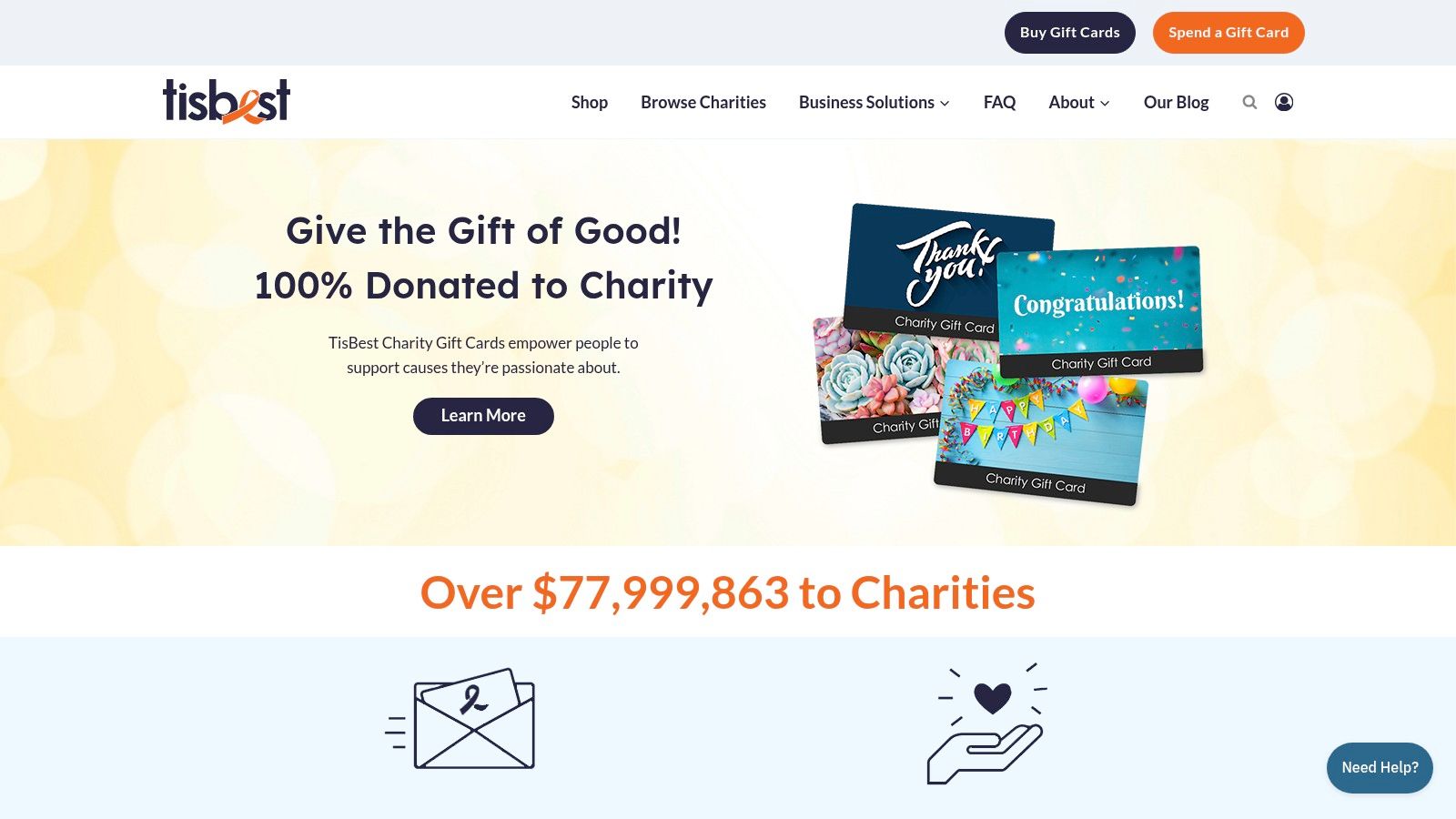
A client gift arrives in late December, the office is half empty, and no one knows where to store another branded box. That is the moment TisBest Charity Gift Cards earns its place on a shortlist.
For service firms, consultants, and creators with remote clients, this format solves a practical problem. It skips shipping delays, works well for last-minute sending, and gives the recipient control over where the value goes. That last part matters more than many teams admit. A good client gift should reflect appreciation without forcing the recipient to accept something they do not want.
Why donation gifts work for some accounts and miss with others
TisBest offers denominations from $10 to $5,000, with e-gift, physical biodegradable cards, and printable PDF delivery. Recipients can direct the value to more than 1.8 million IRS-recognized U.S. 501(c)(3) nonprofits. For businesses managing a spread-out client list, that makes execution simple and timing easier to control.
The strategic question is not whether charity gifts are good. It is whether they fit the relationship.
They tend to work best when the client already signals a clear interest in philanthropy, sustainability, community work, or minimalism. I would also consider them for creator businesses and service providers whose brand already centers on values, because the gift then feels consistent rather than abstract. In those cases, the donation is part of the message.
Budget still needs structure. Everki's corporate gifting statistics roundup notes that many businesses increased gifting budgets in 2024, and common guidance often places standard client gifts in the $25 to $50 range, key accounts higher, and VIP relationships higher still. That framework is useful here. A smaller TisBest card can work well with a thoughtful handwritten note, while a larger amount makes more sense for long-term retainers, referral partners, or clients who have driven real revenue.
The trade-off is emotional texture. Some recipients see a charity card as thoughtful and respectful. Others read it as less personal than something selected for them directly. If the relationship has been warm and specific all year, a generic donation can feel thinner than a gift tied to a shared project, an inside joke, or the way they work.
Used well, this is not a fallback option. It is a smart choice for businesses that want holiday gifting to reflect both appreciation and judgment.
6. Sendoso
Sendoso belongs in a different category from the lighter gifting platforms. It's built for organizations that want gifting tied to systems, workflows, approvals, and reporting rather than one-off holiday execution.
That makes it useful for larger sales teams, customer success programs, and account-based campaigns where gifts are one touchpoint in a broader playbook. If a company already runs CRM-driven outreach and wants governance around who sends what, to whom, and when, Sendoso is built for that environment.
When this platform earns its keep
The appeal isn't just fulfillment. It's control. Teams can centralize sourcing, connect sends to campaigns, and avoid the common problem where every department handles gifts differently.
Gifting isn't solely a budget question. Compliance and tax treatment often matter more than price alone. Informal budgets around $20 to $50 are common, and businesses often warn against overly expensive gifts, but the primary issue is usually internal policy, industry rules, and anti-bribery risk, as discussed in AmTrust Financial's guidance on holiday gifts for clients. For regulated or global businesses, a platform with stronger controls can prevent headaches.
The trade-off is obvious. Smaller teams usually won't need an enterprise setup for a once-a-year send. Sendoso starts to make sense when holiday gifts for clients are only one part of a year-round gifting program tied to renewals, sales outreach, executive engagement, or customer milestones.
7. Caroo
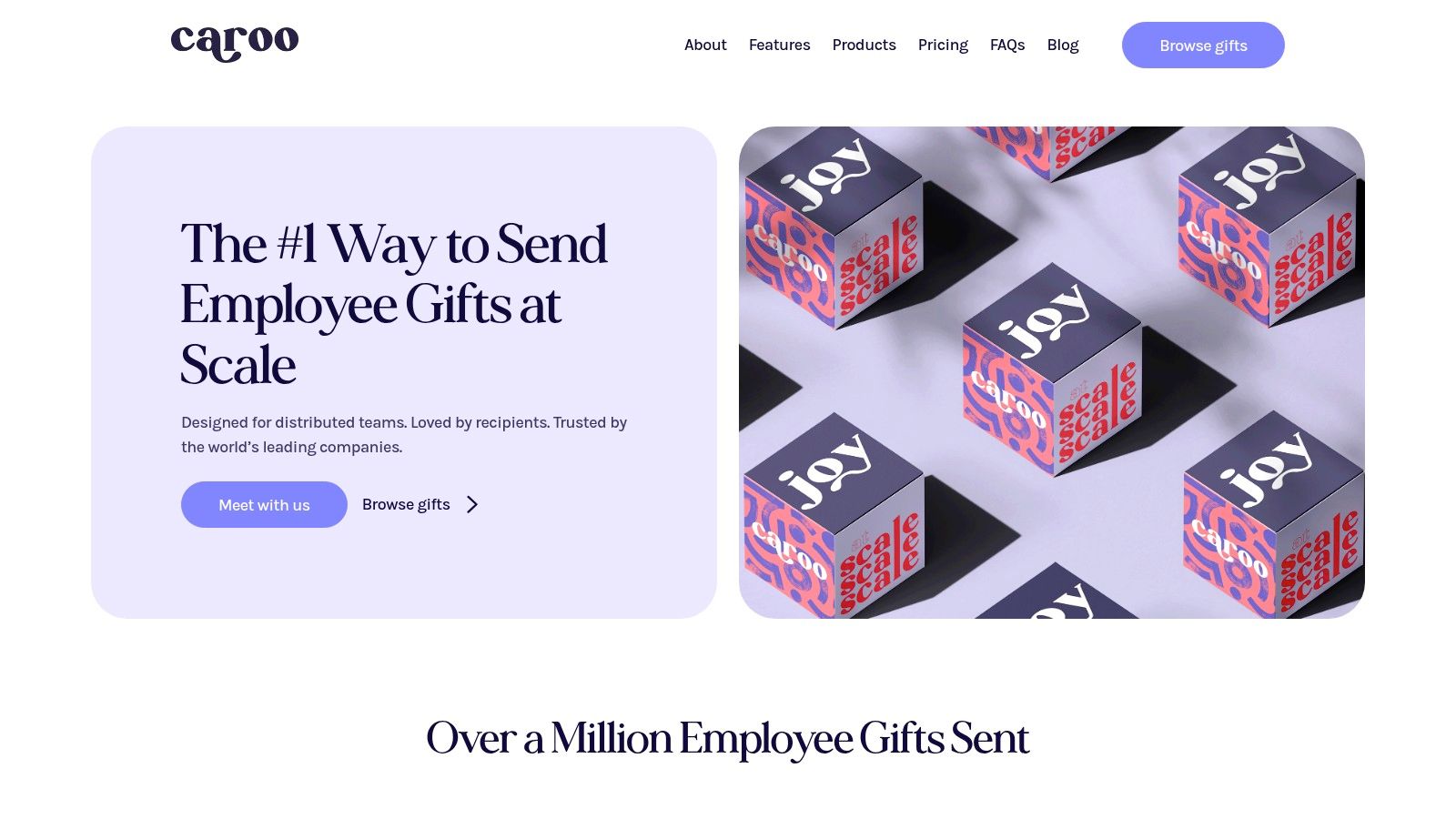
Caroo is a practical choice for teams that want polished execution without turning the gifting process into a project. Its sweet spot is broad client lists, snack and wellness gifting, and budget control.
This platform is especially useful for companies that want a gift to feel generous without feeling extravagant. Snack boxes, wellness-oriented kits, and small goods often land well because they're easy to use, widely understandable, and less risky than highly taste-specific products.
The practical advantage
Caroo's transparent approach is a big part of the draw. Teams can launch quickly, collect addresses without endless spreadsheet cleanup, and manage straightforward sends without custom-studio complexity. That's valuable for service businesses that are already busy finishing deliverables at year-end.
There's also a market context worth keeping in mind. The global gift retailing market is projected to grow from USD 509.27 billion in 2026 to USD 678.08 billion by 2034, implying a 3.64% CAGR, and Europe held the largest regional share at 37.76% in 2025 according to Fortune Business Insights. Client gifting isn't a fringe tactic. It's a mature category, which is one reason practical, scalable platforms keep gaining ground.
Caroo isn't the right choice for ultra-premium executive gifting. It's better for breadth than bespoke luxury. But when the goal is to send holiday gifts for clients that are easy to approve, easy to distribute, and easy for recipients to enjoy, it does that job well.
Top 7 Holiday Client Gift Comparison
| Service | 🔄 Implementation Complexity | 💡 Resource Requirements | ⚡ Speed / Efficiency | ⭐ Expected Outcome / Quality | 📊 Ideal Use Cases & Key Advantages |
|---|---|---|---|---|---|
| Loop & Tie | Low for basic sends; moderate for deep customization | Low start costs; pay-per-gift; paid tiers for integrations/branding | Fast to launch and scale for bulk/staggered campaigns | High recipient satisfaction by offering choice; reduces waste | Mixed client lists; simple logistics; donation option available |
| Teak & Twine | Moderate–high (custom proposals, kitting, PM) | Higher per-unit costs; longer lead times and minimums; white‑glove support | Slower to execute due to custom work and timelines | Premium, design-forward presentation; highly photogenic | Brand-elevating client touchpoints; premium, bespoke kits |
| Packed with Purpose | Moderate (curated, impact-focused sourcing) | Mid-range budget; sourcing from mission-driven vendors; B Corp credentials | Moderate; can face extended lead times in peak season | Strong social-impact narrative that resonates with values-led audiences | Nonprofits and purpose-led brands; authentic impact messaging |
| Goldbelly Corporate Gifting | Moderate (cold-chain and vendor coordination) | Variable costs with cold‑chain considerations; vendor-dependent shipping | Variable, timing-sensitive for perishables, trickier in peak season | High emotional impact and shareability; memorable food experiences | Regional/experiential food gifts; talk-worthy client moments |
| TisBest Charity Gift Cards | Very low, simple digital delivery | Minimal resources; no fulfillment logistics; flexible denominations | Immediate; excellent for last-minute or remote campaigns | High values alignment; no physical keepsake | Year-end giving, compliance-friendly programs, recipients who prefer donations |
| Sendoso | High, enterprise workflows, CRM integrations, onboarding | Enterprise pricing, warehousing, integrations, dedicated fulfillment | Very efficient once onboarded; automates frequent, trackable sends | Strong attribution and governance; scales for recurring programs | Large teams needing ROI tracking, pipeline-driven gifting, multi-program use |
| Caroo | Low–moderate, straightforward setup and pricing | Low to moderate budget; flat-rate shipping and simple fulfillment | Fast to deploy for broad lists and recurring touches | Good perceived value for snack/wellness care packages; not highly bespoke | Budget-controlled care packages, recurring employee or client touches |
Executing a Memorable Gifting Experience
Choosing the platform is only half the decision. Execution determines whether the gift feels thoughtful or forgettable.
Presentation comes first. The note often matters more than the object. A clean package, branded insert, and specific message tell the client this wasn't pulled from a generic holiday list at the last minute. Businesses that care about quality in their client work should show that same standard in the gift experience.
Timing is next. Early December usually works better than the final rush before the holidays. It gives packages a better chance of arriving before vacations, office closures, and shipping pileups. It also keeps the gift from competing with every other box that lands in the same week.
The message should be direct and personal. Mention a project, a milestone, a referral, a launch, or a challenge the two sides worked through together. That kind of specificity creates the feeling most companies want but often miss. Appreciation lands when the client can tell the sender remembers the relationship clearly.
A few sample notes help:
Sarah, working with you on [Project Name] this year has been a highlight. Thank you for your partnership and trust. Wishing you and your team a wonderful holiday season.
John, it's been a pleasure to begin working together this fall. There's real excitement about what comes next, and warm wishes are headed your way for the holidays.
Maria, thank you for being such a strong supporter this year. Your referral of [Referred Client] meant a great deal. Happy Holidays.
The strongest gifting programs also match the gift to the client tier. Broad appreciation lists need efficiency and consistency. Key accounts deserve more personalization. VIP relationships often justify a higher-touch presentation, but only if the gesture still feels appropriate to company policy and the nature of the partnership.
Holiday gifts for clients work best when they don't try too hard to impress. They acknowledge the relationship, reflect the brand well, and arrive without creating friction for the recipient. That's the standard worth aiming for.
Get Up Productions helps brands turn expertise into authority-building content that keeps clients engaged long after the holidays end. For businesses that want stronger year-round relationship marketing through polished podcasts, video, and repurposed content, Get Up Productions offers the kind of professional execution that makes every client touchpoint feel intentional.