
A lot of nonprofit teams sit on exactly the same problem. They have moving stories, credible subject-matter experts, a community that cares, and no reliable channel for sharing any of it in a way that feels human. The newsletter gets skimmed. Social posts disappear in a day. Event attendance depends on calendars and geography.
Podcasting solves a different problem than most nonprofits expect. It doesn't just publish updates. It creates repeated attention. A supporter can hear a program director explain what changed in the field, listen to a volunteer describe why they stayed, or hear a beneficiary tell a story with nuance that never fits in a caption. That kind of attention builds trust.
For nonprofits trying to figure out how to start a nonprofit podcast, the challenge usually isn't enthusiasm. It's everything around it. Internal approvals stall the idea. Staff capacity gets misjudged. No one knows whether the audience even wants a show. Then the team records one episode and momentum dies.
A strong nonprofit podcast starts before the mic turns on. It needs a mission-aligned reason to exist, a format the audience will follow, a workflow that staff can sustain, and a launch plan tied to donor engagement rather than vanity metrics. Even creative teams benefit from studying how memorable stories are structured in other media, because narrative shape matters just as much in audio.
Table of Contents
- Your Nonprofit Has Stories Worth Telling
- Build Your Strategic Foundation Before Pressing Record
- Funding Your Podcast A Practical Budgeting Guide
- Design a Show Your Supporters Will Love
- The Production Workflow From Recording to Editing
- Launch Your Podcast and Get It Heard
- Grow Your Audience and Measure Your Impact
Your Nonprofit Has Stories Worth Telling
Every nonprofit has raw material for a compelling show. Staff members see the work up close. Volunteers carry conviction. Program leaders understand the problem better than others contributing to the public conversation. Supporters want to feel connected to all of that, not just informed about it.
A podcast gives those stories room to breathe. Audio is intimate in a way most channels aren't. A listener hears tone, hesitation, emotion, and conviction. That matters when an organization needs trust, not just visibility.
The strongest nonprofit podcasts don't sound like extended fundraising pitches. They sound like thoughtful conversations, field reporting, mission-driven education, and real human voices. That's why the medium works so well for causes that depend on long-term relationships.
A good nonprofit podcast doesn't add noise. It gives supporters a reason to spend time with the mission.
There's also a real audience opportunity. This year, 55% of Americans, or 158 million people, are expected to listen to podcasts monthly, with 40% tuning in weekly, according to industry data cited by Double the Donation. For nonprofits, that means potential donors, volunteers, and advocates already understand the medium. The barrier isn't teaching people what podcasts are. It's giving them a show worth following.
Build Your Strategic Foundation Before Pressing Record
Most nonprofit podcasts that stall don't fail because the cause is weak. They fail because the team skipped strategy and went straight to equipment. Before anyone records an intro, the organization needs to decide what job the show will do.
Start with one mission outcome
The first question is simple. Why does this podcast exist? Harness puts that question at the center of nonprofit podcast planning in its guidance on how to start a nonprofit podcast. If the answer is “to get our name out there,” the concept is still too vague.
A better answer sounds like this:
- Donor cultivation: Use stories and conversations to deepen trust before a campaign.
- Volunteer recruitment: Highlight people in the work and show what participation looks like.
- Community education: Explain the issue clearly and consistently.
- Advocacy support: Give listeners language, context, and urgency around a policy issue.
One podcast can support more than one outcome, but it needs a primary lane. Otherwise every episode turns into a compromise between departments.
Practical rule: If the team can't name the action a listener should take after listening, the show isn't strategically clear yet.
For organizations with a board, ministry context, or multiple stakeholder groups, a written plan helps. A resource like this strategic planning guide for churches is useful because it shows how to frame communication efforts inside a broader mission and governance structure, which is often exactly where nonprofit podcast proposals live or die.
Define the listener before the format
A lot of teams ask whether they should do interviews, narrative episodes, or roundtables too early. The better question is who the show is for. A nonprofit doesn't need a generic “public audience.” It needs a specific listener with a reason to care.
That listener might be:
- A warm donor who already gives and wants closer connection to outcomes
- A future volunteer who needs confidence before signing up
- A parent or family member looking for trusted information
- A local leader who can amplify the mission in the community
The team should write down what that listener already knows, what they misunderstand, what they worry about, and what would make them come back next week. That kind of audience work is the difference between a show that sounds helpful and one that feels made for someone.
Organizations that need help sharpening this picture often benefit from basic market-positioning work first. Even outside podcasting, the logic in this guide on why target market is important applies directly. If the audience definition is fuzzy, the content usually is too.
Treat approvals like a production task
Nonprofits deal with approval layers that most generic podcast advice ignores. Communications may need executive review. Programs may need legal or privacy checks. A board member may want final sign-off on messaging. Those aren't side issues. They're launch variables.
That matters because data from New York State shows that 40% of nonprofit podcast proposals fail not due to lack of audience interest, but due to internal governance delays, as noted by Lightful's charity podcast guidance. Approval bottlenecks deserve their own plan.
A simple internal proposal usually works better than a big creative pitch. Keep it operational:
- State the mission fit. Explain how the show supports fundraising, education, advocacy, or community building.
- Define the risk controls. Spell out guest release process, privacy standards, review stages, and who approves what.
- Set a pilot scope. Propose a limited first run rather than an open-ended commitment.
- Name the owner. One staff member must own deadlines and approvals.
When approvals are vague, the podcast becomes everyone's side project. When approvals are mapped, it becomes an executable program.
Funding Your Podcast A Practical Budgeting Guide
Budget questions stop more nonprofit podcast ideas than microphone questions. That's usually because the team is asking the wrong thing. The core question isn't “How much can a podcast cost?” It's “What level of quality can the organization sustain with its money and staff time?”
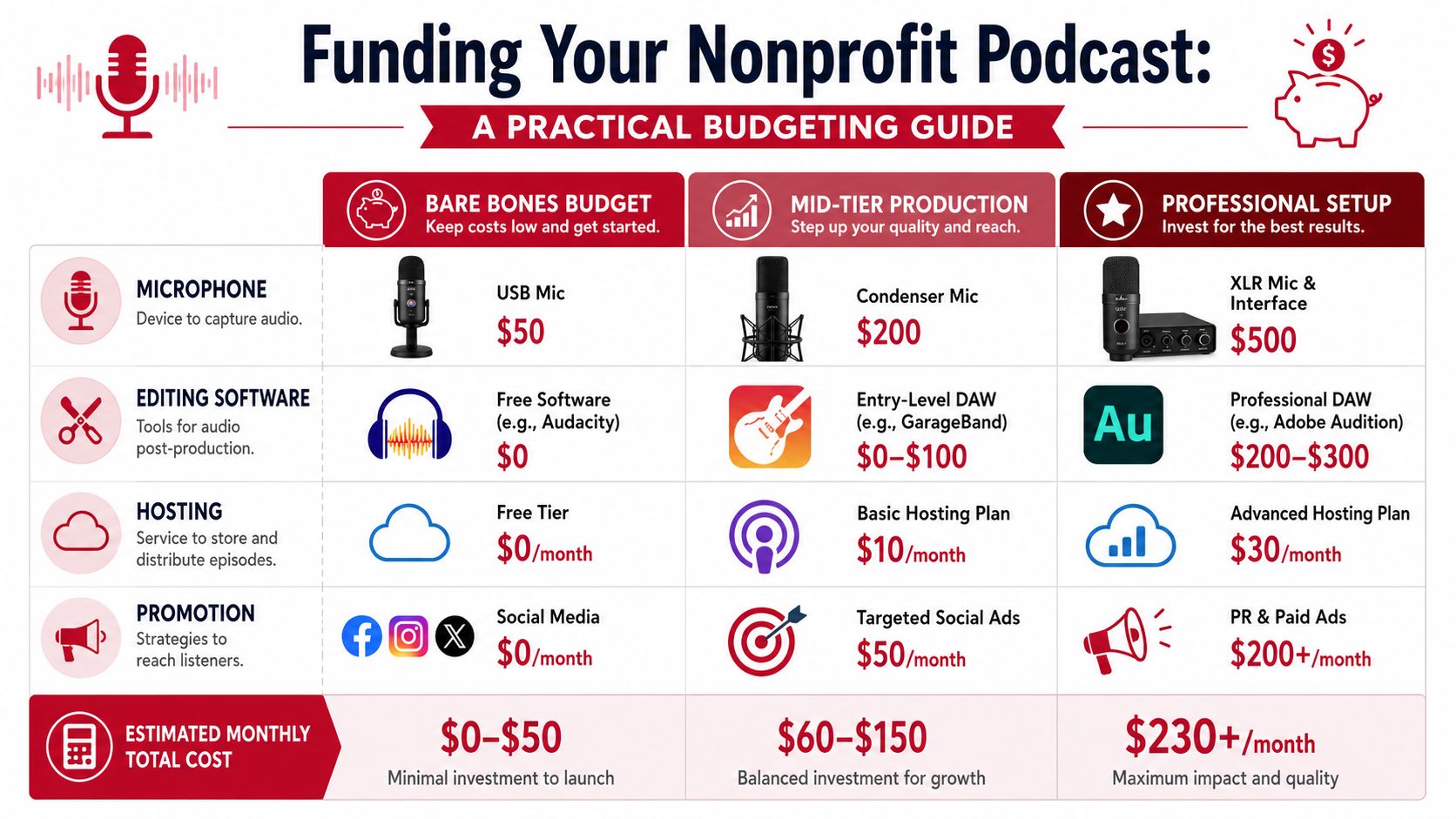
A podcast can start lean. A nonprofit podcast can be launched with a total startup cost under a few hundred dollars, using a modest USB microphone such as a Samson Q2U or Blue Yeti under $100, free recording and editing software like Audacity, and a hosting plan costing $15–30 per month, according to Castos. That's a workable starting point for many organizations, especially when the larger cost is time.
What the lean setup actually includes
The cheapest viable setup is not the same as the cheapest possible setup. A phone mic in an echoing conference room creates avoidable problems. A lean setup still needs three things: a reliable microphone, a quiet recording space, and a publishing platform.
For many nonprofits, the bare minimum workable stack looks like this:
- Microphone: Samson Q2U or Blue Yeti
- Recording and editing: Audacity
- Hosting: a platform in the $15–30/month range
- Monitoring: closed-back headphones already owned by staff or volunteers
- Recording space: a carpeted office, small meeting room, or home office with soft surfaces
That keeps cash outlay modest. What it doesn't remove is labor. Even a low-cost show takes planning, scheduling, guest coordination, recording, editing, approvals, publishing, and promotion.
Nonprofit Podcast Budget Tiers
| Budget Tier | Estimated Startup Cost | Key Gear & Software | Time Investment / Episode | Best For |
|---|---|---|---|---|
| DIY | Under a few hundred dollars | USB mic such as Samson Q2U or Blue Yeti, Audacity, basic hosting plan | High internal time commitment across planning, recording, editing, and publishing | Small teams, pilot shows, volunteer-led projects |
| Hybrid | Higher than DIY, depending on what gets outsourced | In-house recording setup plus freelance or contract editing, standard hosting platform | Moderate internal time commitment, with editing removed from staff workload | Teams with limited capacity but strong internal hosts |
| Full-Service | Higher investment, tailored to scope | Professional recording support, editing, publishing support, branding, repurposing | Lower internal production load, with staff focused on content and approvals | Organizations that want consistency and less operational strain |
A hybrid or full-service model often makes sense when the podcast supports fundraising or executive visibility. If a show is strategic, it shouldn't depend on one overloaded staff member editing late at night.
For nonprofits thinking beyond a line-item budget, it helps to align the show with broader resource planning. These comprehensive strategies for nonprofits are useful for that conversation because podcasting usually performs best when it's treated as part of donor communication, not an isolated media experiment.
Where nonprofits overspend and where they should not cut
Many teams overspend on branding before they've tested the concept. Custom music, polished trailers, and premium visuals can wait if the show idea still isn't proven.
Cuts should happen elsewhere. Don't cut on microphone quality. Don't cut on editing if staff can't do it well. Don't cut on hosting reliability. And don't build a show around a process the team can't repeat. Even the smartest podcast business model falls apart if production assumptions don't match operational reality.
Design a Show Your Supporters Will Love
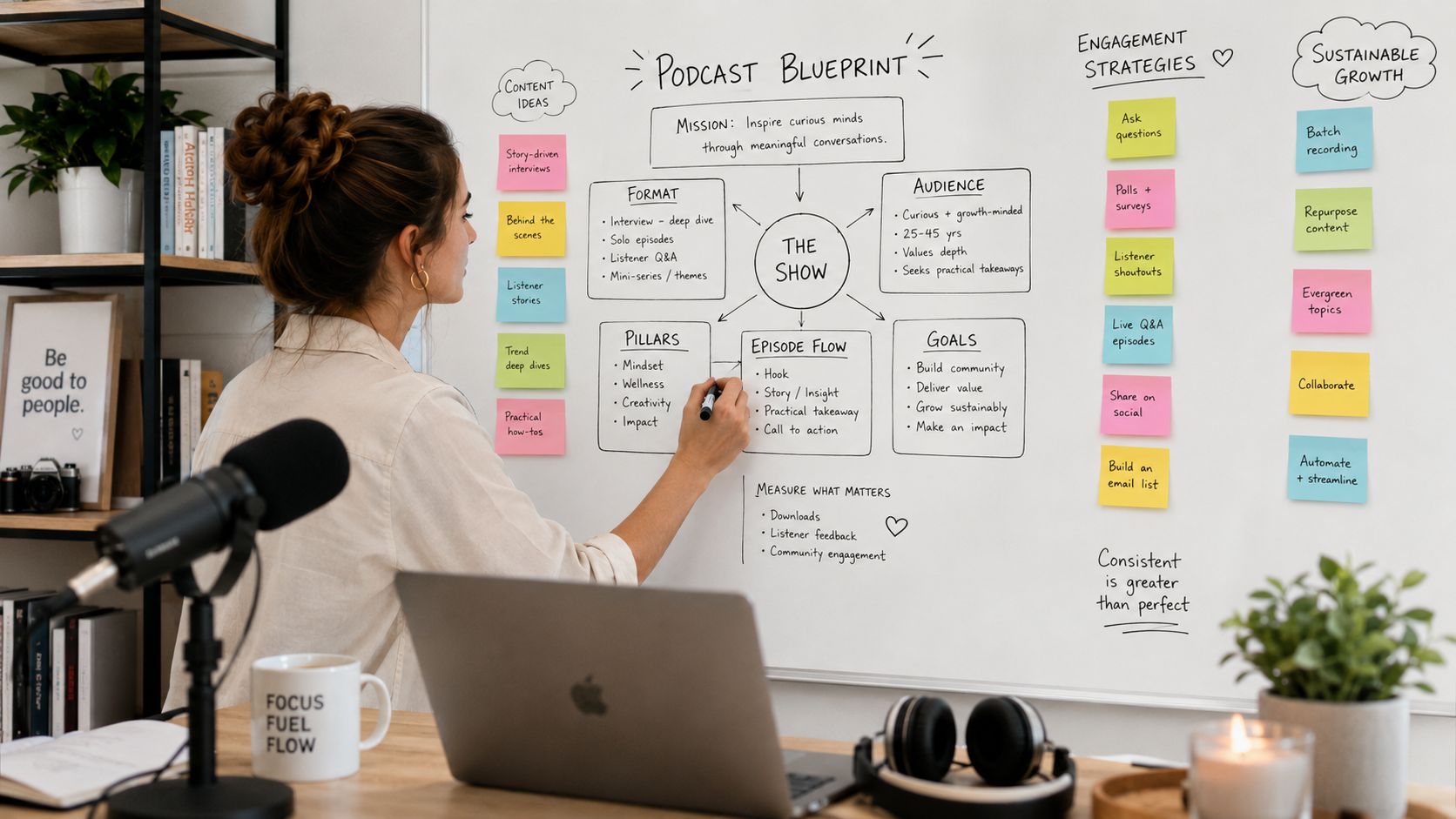
The format determines whether the show feels natural or forced. A nonprofit can have strong stories and still choose a structure that burns out the staff or confuses the audience. Good format decisions aren't mainly creative. They're strategic and operational.
Choose a format that matches the team
A few formats work especially well for nonprofits:
- Interview show: Best when the organization has access to staff experts, partners, volunteers, or community voices.
- Narrative storytelling: Strong for mission-driven stories, campaign series, or educational arcs, but heavier to produce.
- Panel discussion: Useful for policy, advocacy, or issue-based conversations, though it requires strong moderation.
- Solo or co-hosted explainer: Good when one leader or spokesperson can communicate clearly and consistently.
The right choice depends on available hosts, guest access, approval requirements, and editing capacity. Narrative work can be powerful, but it usually takes more scripting and post-production. Interviews are often the most sustainable starting point because they distribute the energy of the episode across host and guest.
Validate interest before building a season
Many nonprofit teams often skip a necessary step. They assume their audience wants a podcast because the mission matters. That's not enough. Supporters may care a great deal and still prefer email, events, or video.
Research from Big Duck reveals that 35% of nonprofit podcasts launch without surveying their actual audience on whether they listen to podcasts or care about the organization's specific content, leading to high abandonment rates within six months, according to Big Duck.
Validation doesn't need a formal research project. A nonprofit can learn a lot from simple tests:
- Email one question. Ask subscribers whether they listen to podcasts and what topic they'd most want covered.
- Post a quick poll. Social channels can surface whether people respond more to stories, expert guidance, or behind-the-scenes content.
- Call a handful of supporters. Development staff often know which donors will give honest feedback fast.
- Test titles and descriptions. If no version sparks interest, the concept may still be too broad.
Don't validate whether the mission matters. Validate whether this format, for this audience, solves a communication problem they actually have.
Build a calendar that survives real life
A content calendar should be simple enough that someone else can run it if one staff member gets pulled into an event, campaign, or grant deadline. That means episode topics, guest names, approval deadlines, recording dates, editing handoff dates, and publication dates should all live in one place.
A good early-season calendar often includes:
- Mission episodes: clear explanations of the issue and the organization's role
- Human episodes: beneficiary, volunteer, staff, or partner stories
- Credibility episodes: conversations with experts or field leaders
- Action episodes: opportunities to donate, attend, advocate, or volunteer
The biggest mistake is launching with only one or two finished episodes. A nonprofit needs a buffer. Without one, the podcast starts competing with every urgent need inside the organization.
The Production Workflow From Recording to Editing
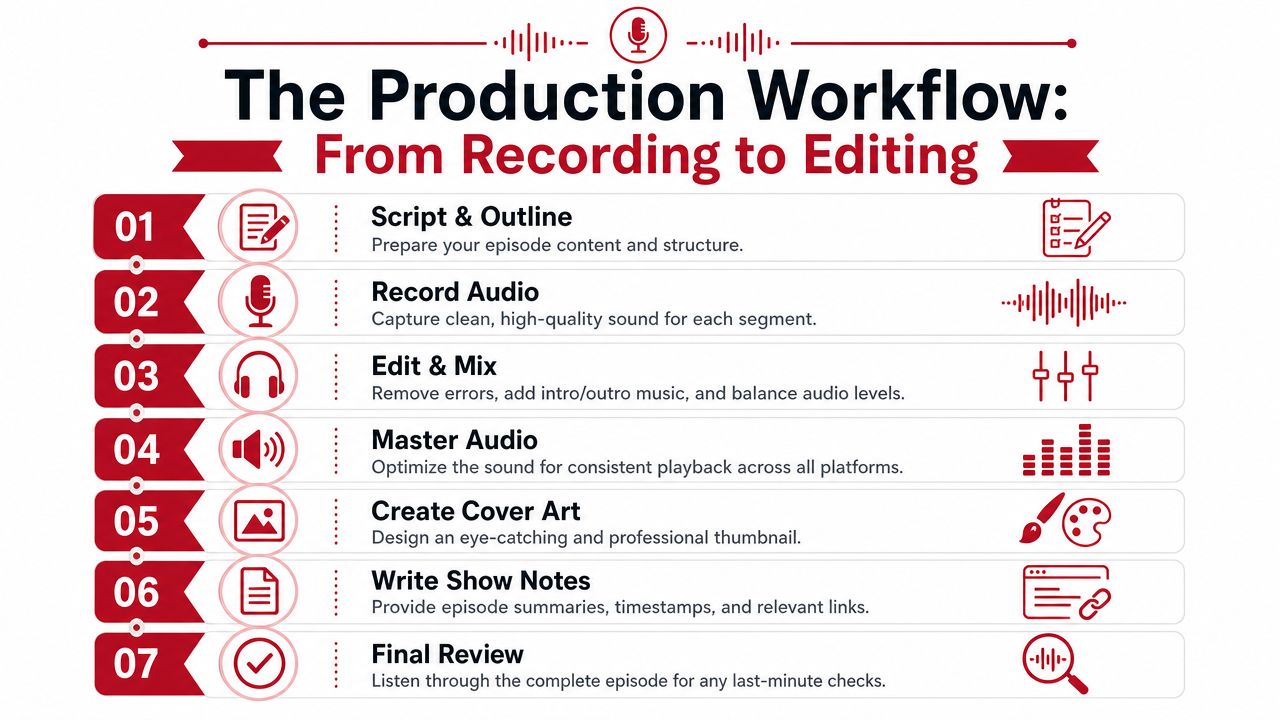
Production quality shapes trust faster than many teams expect. Listeners will forgive a modest setup. They won't keep coming back to muffled audio, obvious echo, or episodes that feel untrimmed. Professionalism in nonprofit podcasting doesn't mean sounding like a national network. It means sounding clear, intentional, and respectful of the listener's time.
Record for clarity, not perfection
The first production priority is the room. A quiet, soft-surfaced space beats a visually impressive but echo-prone conference room almost every time. Carpets, curtains, upholstered chairs, and bookshelves help. Glass walls and empty tables don't.
There are also a few fundamental steps. Over 90% of podcasts fail before reaching episode 3, and common pitfalls include underestimating the production timeline, especially 0.5–1 day of editing per episode, and skipping technical basics like headphones during recording, which matters because echo accounts for 30% of low-quality audio complaints, according to the guidance in this podcast setup video.
A practical recording checklist looks like this:
- Use headphones: Prevent speaker bleed and catch problems immediately.
- Place the mic correctly: Keep it close enough for warmth but not so close that plosives dominate.
- Turn off interruptions: Silence notifications, HVAC noise when possible, and room alerts.
- Record room tone: A few seconds of silence helps smooth edits later.
- Brief the guest: Explain pace, mic distance, and what to do if they stumble.
Field note: A listener will tolerate modest gear much faster than they'll tolerate distracting echo.
Teams that also produce video versions of episodes should pay close attention to voice quality. Many of the same principles in this guide on how to enhance animated video voice over carry over well, especially around clarity, pacing, and performance.
Edit with the listener in mind
Editing is where an episode earns its pacing. The job isn't to erase every breath or make people sound robotic. The job is to remove friction. Long pauses, repeated phrases, avoidable tangents, noisy transitions, and weak openings all make listeners work harder.
A solid nonprofit episode edit usually includes:
- A clean cold open or intro
- Removal of obvious filler and dead space
- Level balancing so speakers sound consistent
- Intro and outro music used sparingly
- A clear call to action that fits the episode
This is also where many teams discover capacity problems. Editing takes real time and attention. It's often the first task to slip when fundraising events, reporting deadlines, or board prep intensify. That's why outsourced editing is such a common and rational decision.
Create a repeatable handoff process
A nonprofit doesn't need a complicated studio workflow. It needs a repeatable one. Production gets easier when every episode follows the same sequence from outline to approval to publish.
A workable handoff process often includes a short internal packet with:
| Workflow Item | What to Include |
|---|---|
| Episode brief | Topic, audience, CTA, guest, approval notes |
| Recording assets | Audio files, intro script, sponsor or donor mention if needed |
| Edit notes | Sections to cut, pronunciation notes, sensitive material flags |
| Review pass | One final approver, deadline, and change window |
That structure prevents endless revision loops. It also protects the host from becoming the default project manager for every stage.
Launch Your Podcast and Get It Heard
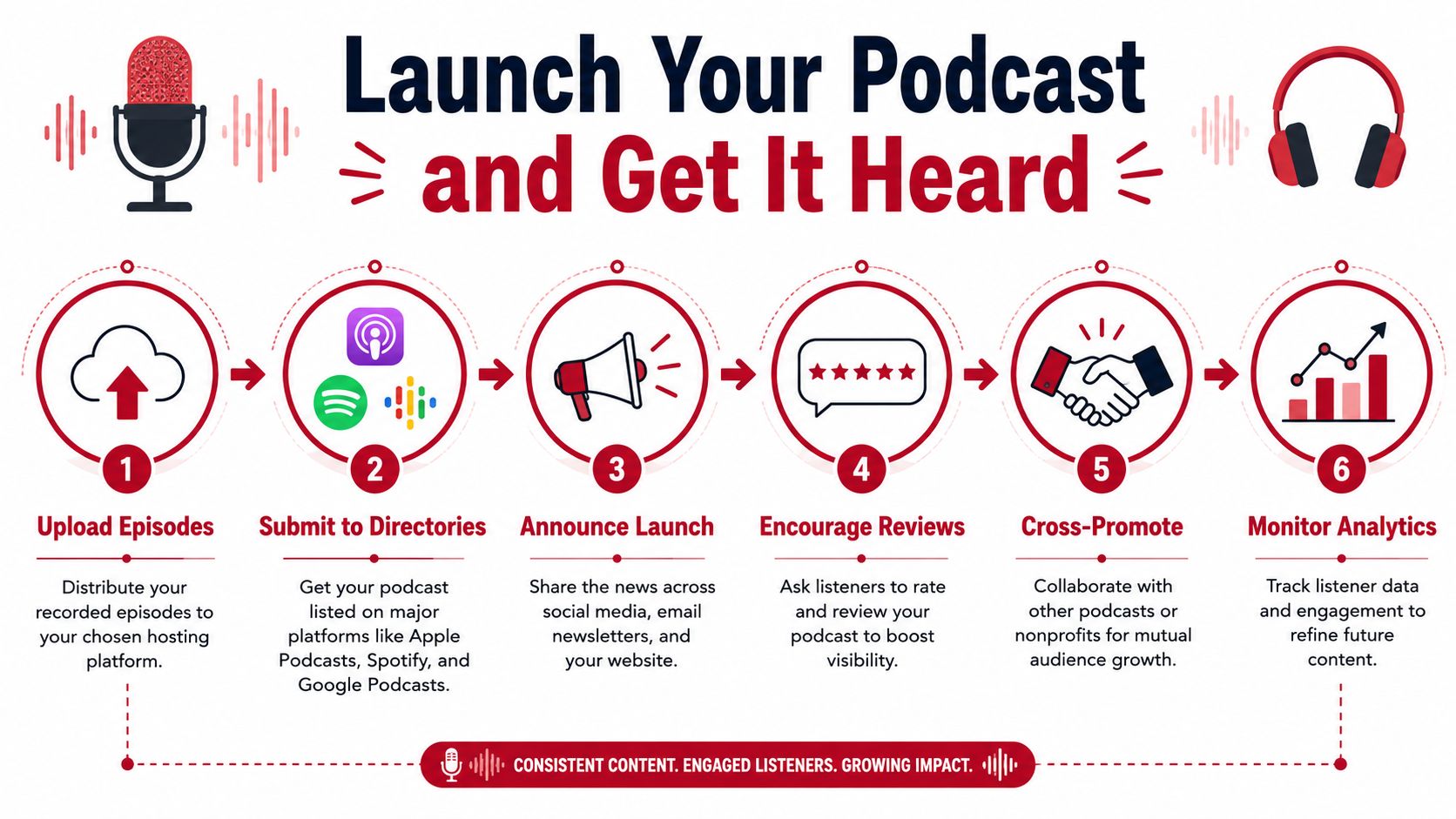
A podcast launch needs more than an upload button. The first impression comes from packaging, consistency, and how clearly the organization tells people what the show is for. If listeners can't understand the promise of the show in a few seconds, they won't sample the first episode.
The launch process is easier to manage when the team sees it as a checklist rather than a big campaign event.
Set up the show for discovery
The hosting platform matters because it controls distribution, analytics, and publishing reliability. For nonprofits that need a straightforward start, lower-cost hosting options such as Anchor or Buzzsprout are frequently practical choices for getting episodes onto major directories without adding unnecessary friction.
Before submitting the show, the team should finalize:
- Podcast title: Clear, mission-aligned, and easy to remember
- Show description: Focused on listener benefit, not internal language
- Cover art: Legible at small sizes
- Trailer: A short introduction that explains who the show is for and why it exists
- Launch episodes: Enough finished content to give new listeners more than one thing to hear
Submission to Apple Podcasts and Spotify is mostly a one-time setup task. Once the show is approved, publishing becomes routine.
A short explainer can help teams visualize the process and sequence their tasks realistically.
Build launch momentum with simple assets
The best nonprofit launches usually use channels the organization already owns. A launch doesn't need to look flashy. It needs repetition and clarity.
Useful launch assets include:
- Email announcement: Explain the show and link to listening platforms
- Website feature: Give the podcast a permanent home on the organization's site
- Social cutdowns: Pull short clips, quotes, or audiograms from the first episodes
- Staff talking points: Make it easy for the whole team to share the show consistently
One common mistake is waiting to promote until after publication. Promotion should start before launch with a trailer, a launch date, and a reason to subscribe early.
Use partnerships to reach the right listeners
For nonprofit podcasting, audience growth often comes from aligned communities rather than broad ad spend. Cross-promotion works especially well when two organizations or shows speak to related causes, donor bases, or local communities.
That can look like:
- Guest swaps with mission-aligned shows
- Newsletter mentions between partner organizations
- Shared episode themes around a campaign or awareness period
- Community introductions through coalition partners
Launch day matters less than launch momentum. The organizations that grow are the ones that keep giving people new reasons to listen and share.
Grow Your Audience and Measure Your Impact
Launch is only the beginning. The strongest nonprofit podcasts become useful because they keep serving the mission after the first burst of excitement fades. That means promotion has to continue, and measurement has to get more serious.
There's a large potential audience available. This year, approximately 55% of Americans, or 158 million people, are expected to listen to podcasts monthly, with 40% tuning in weekly, according to the nonprofit podcast audience data cited here. That scale matters, but it shouldn't push nonprofits toward generic growth tactics. A mission-driven show doesn't need the biggest audience. It needs the right audience taking meaningful action.
Stop reporting downloads in isolation
Downloads matter, but they don't tell leadership whether the podcast is helping the organization. A nonprofit should connect podcast reporting to outcomes the board and development team already care about.
Better questions include:
- Are episodes driving newsletter sign-ups?
- Are listeners clicking through to campaign pages?
- Are volunteers mentioning the show?
- Are donors replying to episode emails?
- Are partners inviting the organization into more conversations because of the show?
When podcast reporting stays tied to mission outcomes, the show becomes easier to defend internally. It stops looking like a side project and starts functioning like a relationship channel.
Turn each episode into a content system
One recorded conversation can fuel much more than a single audio post. Repurposing extends reach without forcing the team to invent new ideas every week. A strong episode can become short clips, quote graphics, email copy, blog excerpts, talking points for staff, and social posts designed for different platforms.
That's one reason podcasting can be a smart communications investment for lean teams. The show becomes a source asset, not a one-and-done deliverable.
Use episode calls to action that map to real goals
Every episode should ask the listener to do one thing. Not five things. One. The call to action should match the role of the episode.
A donor-cultivation episode might invite listeners to join the email list for deeper stories. A volunteer episode might point to an application page. An advocacy episode might ask for one concrete action. A community education episode might guide listeners to a resource hub.
The rule is simple. If the nonprofit can't trace the show to behavior, the podcast will get judged only on audience size. That's a weak position for any mission-driven program.
If a nonprofit is serious about launching a show that sounds polished, stays consistent, and turns each episode into usable content across platforms, Get Up Productions can handle the production heavy lifting. Their team supports recording, editing, YouTube-ready delivery, and strategic repurposing so organizations can focus on the mission, the message, and the people they serve.